Farming in the USA: equipment that keeps big fields moving
A clear guide to the machines many American farms use for planting, spraying, harvesting, moving crops and looking after land.
Why farming in the USA uses large machines
Many farms in the United States are built around wide fields and long working days. A farm may grow maize, soya beans, wheat, cotton, hay, fruit or vegetables. Each crop needs work at the right time of year.
That is why equipment matters. A machine can help one farmer cover more land, keep crops on schedule and reduce wasted seed, fuel and fertiliser. Good equipment also helps protect the soil when it is used with care.
The main jobs on a crop farm
Most crop farms follow a simple cycle. First, the farmer prepares the land. Then seed goes into the soil. The crop must be fed, watered and protected from weeds or pests. At the end, the crop is harvested, moved and stored.
Different machines handle each stage. Some farms own their equipment. Others hire contractors for big jobs like harvesting or spraying.
- Prepare the field before planting.
- Plant seed at the right depth and spacing.
- Spray or spread crop inputs safely and accurately.
- Harvest the crop when it is ready.
- Move grain, hay or produce to storage or market.
Tractors: the everyday power unit
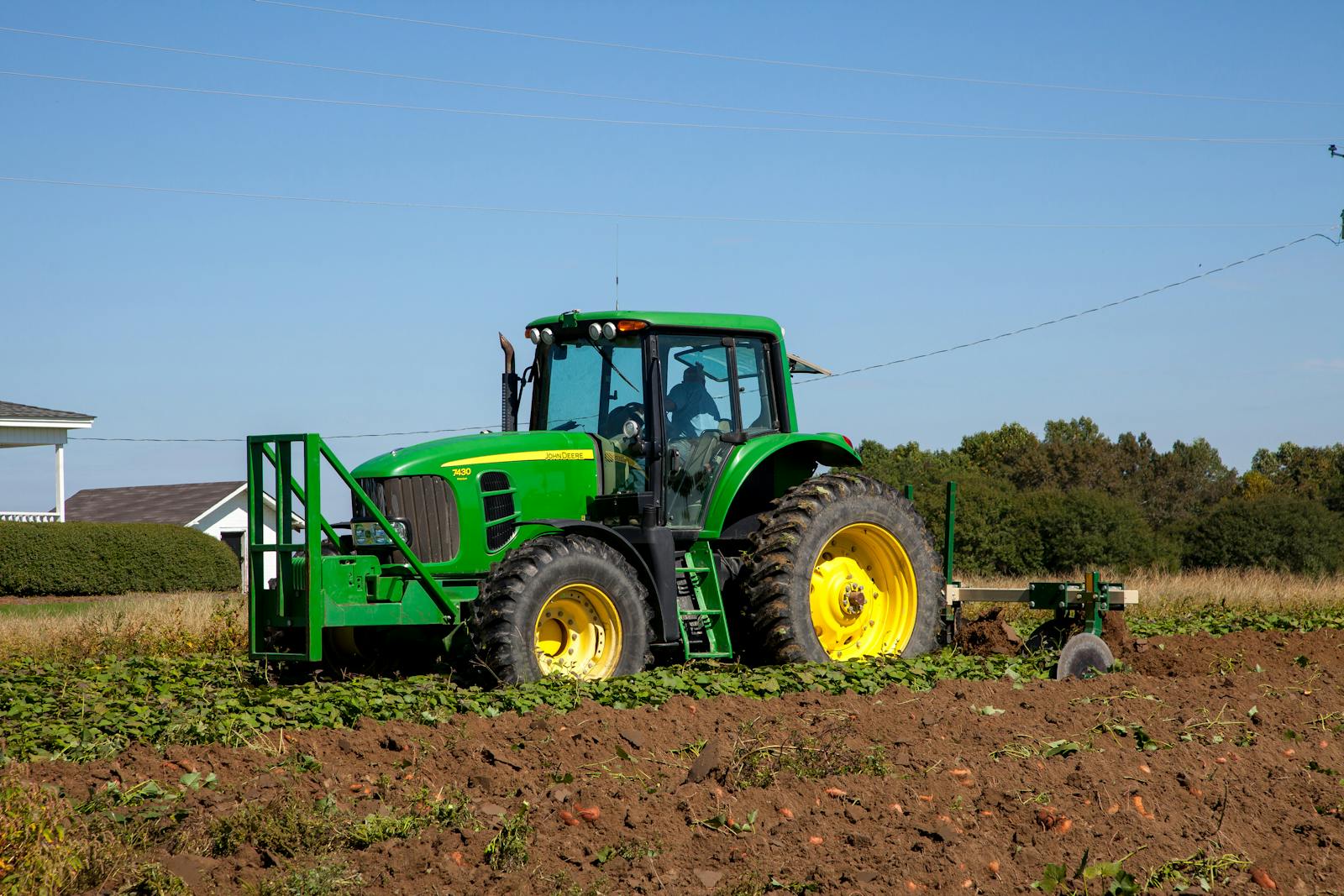
The tractor is still the most useful machine on many farms. It pulls tools, powers attachments and moves trailers. Smaller tractors may work around yards, livestock buildings and orchards. Larger tractors can pull heavy tillage tools or big planters across open fields.
When choosing a tractor, farmers often look at horsepower, weight, tyre or track type, hydraulic flow and cab comfort. These details affect what the tractor can pull and how long the operator can work safely.
Planters, drills and tillage tools
Planters place seeds such as maize or soya beans in neat rows. Seed drills are often used for crops like wheat and cover crops. Both need to be accurate because poor seed spacing can reduce yield.
Tillage tools prepare the soil. Some farms use ploughs, discs or cultivators. Other farms use reduced tillage or no-till systems, where the soil is disturbed less. This can help keep moisture in the ground and reduce erosion.
Sprayers, spreaders and irrigation
Sprayers apply herbicides, pesticides or liquid fertiliser. Spreaders apply dry fertiliser, lime or manure. These machines must be set up carefully so the right amount reaches the right place.
In dry parts of the USA, irrigation equipment is also important. Centre-pivot systems, pumps and pipes help crops grow when rain is not enough. Water use is a major cost, so many farms now monitor soil moisture before irrigating.
Combines and harvest equipment
A combine harvester cuts, threshes and cleans grain crops in one pass. It can harvest maize, wheat, soya beans and other crops when fitted with the right header.
Harvest is a busy time because weather can change quickly. Farmers use grain carts, trailers and trucks to keep the combine moving. If the combine has to stop too often, time and fuel are wasted.
Balers, loaders and handling machines
Hay and straw farms use mowers, rakes, tedders and balers. Balers make round or square bales that are easier to move and store. Livestock farms may use telehandlers, skid steers or loaders to handle feed, bedding and manure.
These handling machines may look smaller than field tractors, but they are used every day. Good visibility, safe lifting capacity and strong tyres are important.
Technology on modern US farm equipment
Many newer machines use GPS guidance. This helps the driver keep straight lines and avoid overlapping passes. It can save seed, spray, fertiliser and fuel.
Some machines also collect data during work. Yield maps, soil maps and machine records can help a farmer plan future jobs. The aim is simple: put the right input in the right place at the right time.
How to choose the right equipment
The best equipment depends on the farm. A small vegetable farm does not need the same machinery as a large grain farm in the Midwest. A good choice should fit the crop, field size, soil type, budget and available labour.
Farmers also need to think about parts, dealer support and repair time. A cheaper machine can become expensive if it breaks during planting or harvest and parts are hard to find.
- Match horsepower to the implement, not just to the biggest field.
- Check weight, tyres or tracks to reduce soil compaction.
- Look at fuel use and service intervals.
- Make sure local parts and support are available.
- Choose safe, comfortable cabs for long work days.
Final thought
Farming in the USA uses many types of equipment because the country grows many crops across different climates and soil types. The machines are not just about size. They help farmers work at the right time, use inputs carefully and bring crops in before the weather turns.
For buyers, the key is to compare real specifications, check the machine history and choose equipment that fits the job. That is where clear, sourced machinery data can make a big difference.
Compare machines before you buy.
Use FarmFleets to check specs, photos, recalls and source confidence for tractors, combines and other farm equipment.