
AI decision tools on the farm: what they can and cannot do in 2026
Camera-guided sprayers, crop sensors and livestock alerts are the parts of farm AI that already work. Here is how to judge them, what the evidence says, and the questions to ask before paying for one.
The editorial team that prepares and reviews FarmFleetSpecs reports and guides.
What 'AI' means on a farm in practice
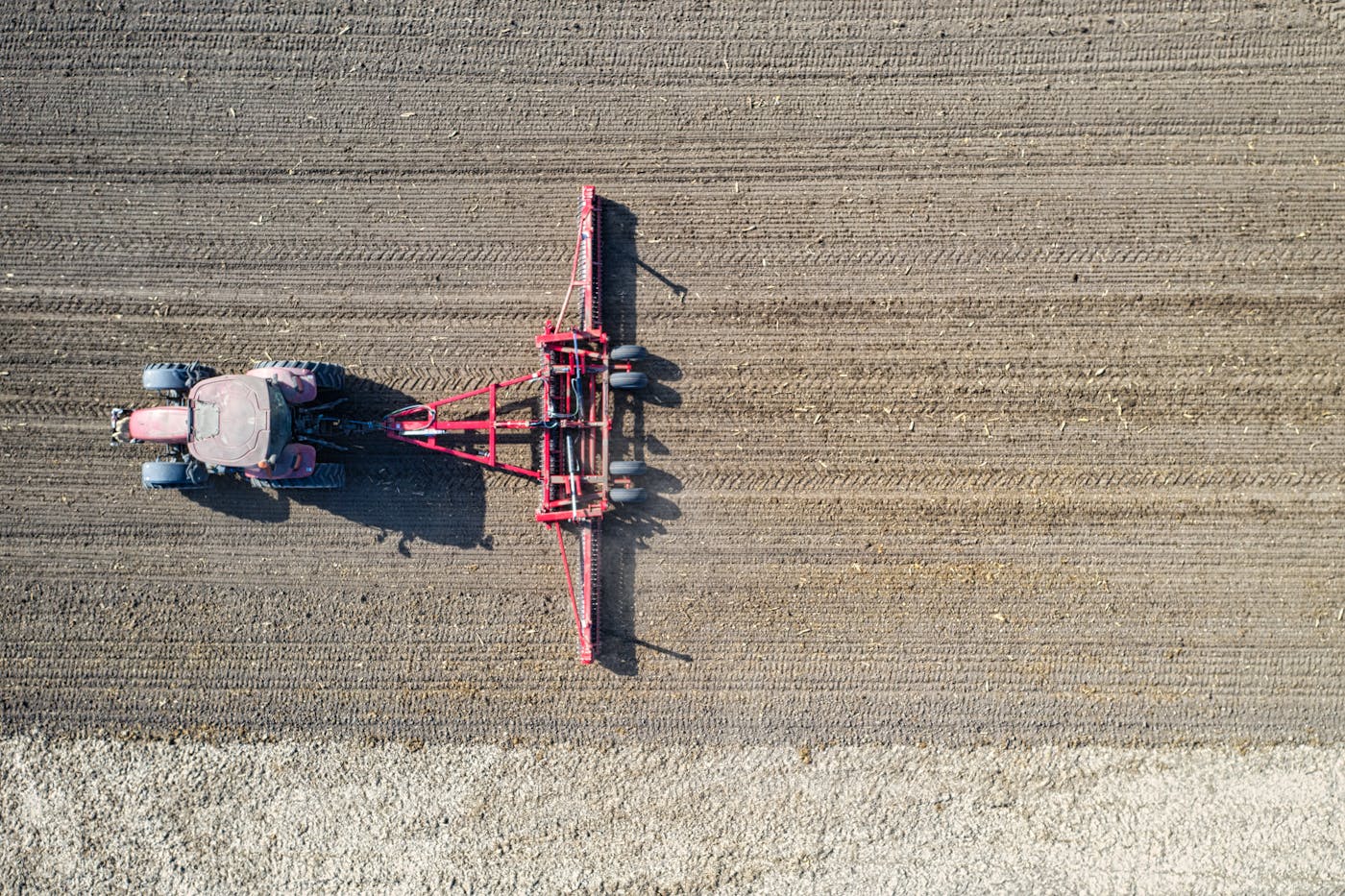
Most farm products sold as AI do one of three narrow jobs. They classify images, for example deciding whether a green shape under a spray boom is a crop plant or a weed. They turn sensor readings into a map or a rate, such as converting crop reflectance into a nitrogen prescription. Or they spot a change against a baseline, such as a dairy cow ruminating less than usual. None of these systems runs a farm. Each takes one decision that a person used to make by eye and makes it faster, more often or across more ground.
That framing helps when a salesperson promises a platform that 'optimises the whole farm'. Ask which single decision it improves, what data it needs to do that, and how you would know if it got the decision wrong.
Where the evidence is strongest: targeted spraying
Camera-guided spot spraying is the clearest example of on-farm AI paying its way. John Deere's See & Spray uses boom-mounted cameras to decide, plant by plant, whether to open an individual nozzle. In September 2024 the company reported that customers saw an average herbicide saving of 59% across maize, soya bean and cotton fields during the 2024 season, measured against broadcast spraying, on more than one million acres. It also cited an Iowa State University extension study reporting 76% average product savings across the test fields.
Two caveats matter. The saving depends on weed pressure: a clean field saves a lot, a heavily infested one saves little. And the technology only recognises the crops and situations it has been trained for; Deere lists maize, soya beans, cotton and fallow. For the fuller picture on sprayers, see our guide to precision spraying and weed control.
Why the boring data comes first
AI tools learn from data, and many farms do not yet collect the data they need. USDA's Economic Research Service report 'Precision Agriculture in the Digital Era' (EIB-248, February 2023) found automated guidance on well over half of the acres planted to maize, cotton, rice, sorghum, soya beans and winter wheat. Yield maps, soil maps and variable-rate technology were far less common, used on roughly 5 to 25% of planted acres for winter wheat, cotton, sorghum and rice.
That gap matters. A variable-rate nitrogen model is only as good as the yield and soil data underneath it. If your yield monitor has never been calibrated, or your field boundaries are wrong in the farm software, a clever recommendation engine will produce confident but wrong answers. Sorting out calibration, boundaries and consistent field names is unglamorous, but it is what makes any later decision tool trustworthy.
Livestock alerts: useful, but only if someone acts
Collars, ear tags, leg bands and rumen boluses measure activity, rumination, lying time or temperature and raise an alert when an animal departs from its normal pattern. Penn State Extension's guidance on precision livestock technologies stresses that these systems offer precision rather than diagnostic certainty. False alerts are common until thresholds are tuned to the individual farm, and the labour is reallocated rather than removed: someone has to check the alert list every day and decide whether to call the vet, inseminate or simply watch the cow.
If a farm cannot name the person who will act on the alerts, the system will quickly become an expensive dashboard nobody opens. We cover this in more depth in our livestock health sensors guide.
What support exists in England
Defra's Sustainable Farming Incentive 2026 (SFI26) includes precision farming actions. PRF1, variable rate application of nutrients, pays £27 per hectare per year and requires all major nutrients to be applied with variable-rate equipment, either from a prescription file based on zonal soil or crop testing or remote sensing, or linked to a tractor or sprayer-mounted crop reflectance sensor. PRF2, camera or remote sensor guided herbicide spraying, pays £43 per hectare per year. PRF4, mechanical robotic weeding, pays £150 per hectare per year.
Timing is the catch. SFI26 Window 1 closed on 28 August 2026 and Window 2 closed on 22 September 2026 once its budget was allocated. Defra says it plans to offer an SFI scheme in 2027, but the actions and rates may change, so treat the 2026 figures as a guide to what government is willing to support rather than a guaranteed income.
Seven questions to ask before you buy
These questions work for any decision tool, whether it sits on a sprayer, in a parlour or in the farm office.
- Which specific decision does it improve, and how will I measure whether it did?
- Who owns the data it collects, and can I export it in a standard format if I change supplier?
- Does it still work in the field without mobile signal, and what happens when the signal returns?
- What is the full cost over five years, including subscriptions, per-acre fees, unlocks and hardware replacement?
- Is the model trained on crops, breeds and conditions like mine?
- Who on the farm will check the output every day, and do they have the time?
- Can the local dealer support the hardware and software, or does every fault go to a remote help desk?
A simple way to trial a tool
The fairest test is a split comparison. Run the new tool on half a field, or on half the fields of one crop, and your normal practice on the rest. Record inputs used, passes made, time taken and yield. One season will not settle the question, but it will tell you whether the headline claims are anywhere near your conditions.
Keep the machine side in view too. Many tools need a particular sprayer, nozzle system, rate controller or tractor display. Before committing, use the FarmFleets search and compare tool to check that the tractors and implements you already run have the hydraulic capacity, ISOBUS or display support the system needs, so the software purchase does not quietly turn into a machinery purchase.
Sources
Sources checked 2026-09-25
- USDA ERS, Precision Agriculture in the Digital Era: Recent Adoption on U.S. Farms (EIB-248) — checked 2026-09-25
- John Deere, See & Spray customers see 59% average herbicide savings in 2024 (18 September 2024) — checked 2026-09-25
- Penn State Extension, Precision Livestock Farming: Dairy Technologies — checked 2026-09-25
- GOV.UK, SFI26 actions (print version) — checked 2026-09-25
- Defra Farming blog, SFI26: Window 2 now closed (22 September 2026) — checked 2026-09-25
Corrections and feedback
See our Corrections Policy, contact the team, or Report incorrect information.
Compare machines before you buy.
Use FarmFleetSpecs to check specs, photos, source confidence and recorded recall notices for tractors, combines and other farm equipment.