
Water management: irrigation kit for drier, less predictable seasons
After a record-dry July in England, water has become a machinery and planning question as much as a weather one. This guide covers licence rules, soil moisture sensors, a worked scheduling example, and the kit that makes each cubic metre count.
The editorial team that prepares and reviews FarmFleetSpecs reports and guides.
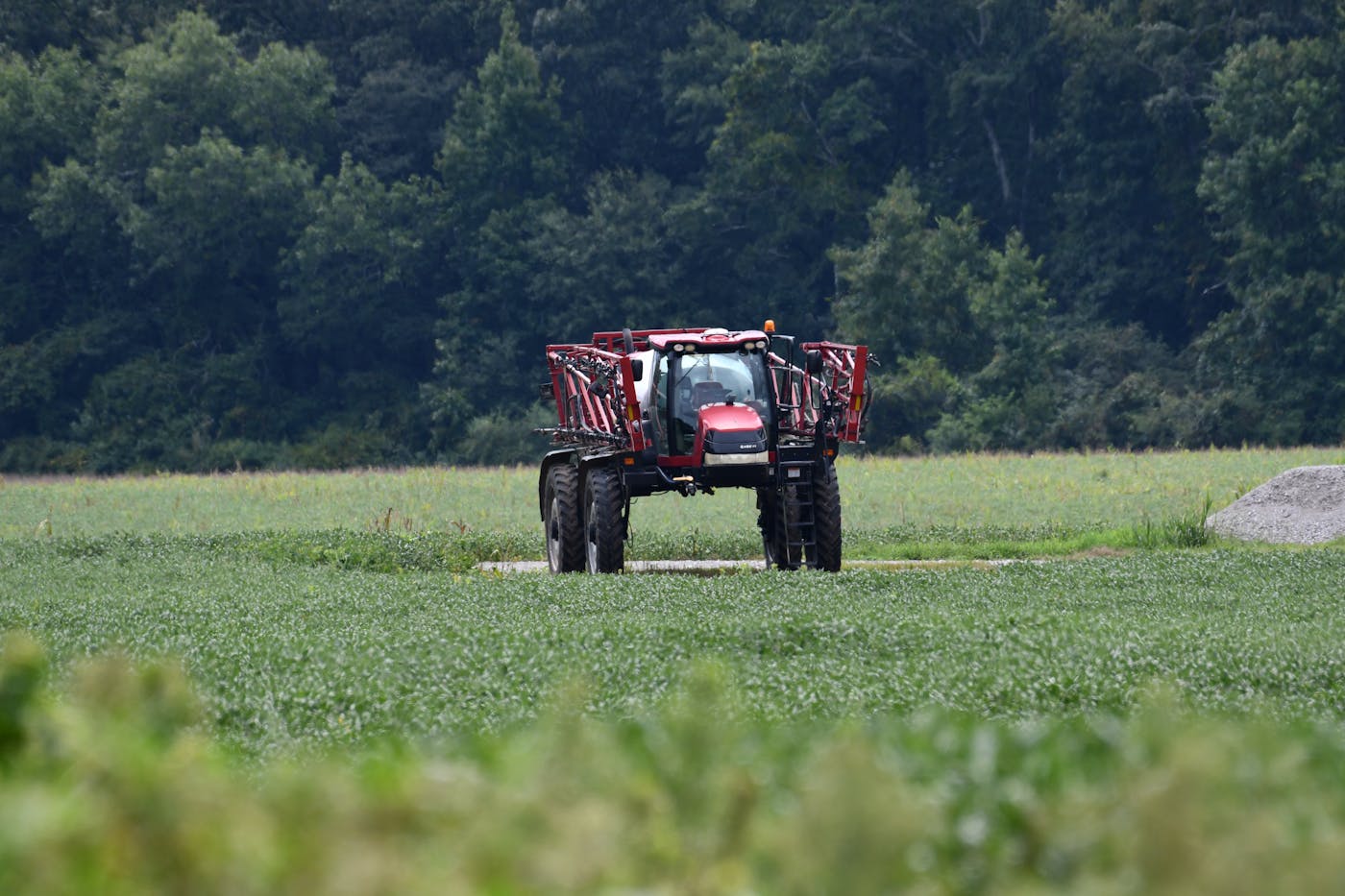
Why water is now a planning job
In August 2026 the Environment Agency reported that England had just had the driest July in 190 years, with only about 5% of the expected rainfall. Demand for irrigation water rose sharply, agricultural reservoir stocks fell quickly on farms that rely heavily on storage, and many hands-off flow conditions, which reduce or stop abstraction when river flows fall below a set level, came into effect.
The same pattern affects irrigated regions in the US, where groundwater limits, district allocations and pumping costs shape how much water a farm can use. On both sides of the Atlantic, the farms that cope best treat water as a budget: they know how much they are allowed, how much the crop needs and how much each piece of kit actually delivers to the root zone.
The licence rules in England
GOV.UK guidance says you need a full abstraction licence for most types of abstraction over 20 cubic metres a day from surface water or groundwater. The Environment Agency adds that if you take water from the same source at several points, the combined total must be 20 cubic metres or less a day to qualify for the exemption. A typical irrigation pump can move that volume in a short time, so the exemption rarely covers crop irrigation.
There are full, transfer and temporary abstraction licences, plus impounding licences for structures such as reservoirs that hold back water. The Environment Agency usually decides temporary licence applications within 28 days and other applications within 4 months, though complex cases can take longer. During drought it can also issue Section 57 notices under the Water Resources Act 1991 restricting spray irrigation across a catchment.
If you have no licence, or not enough, you may be able to trade or share water rights with an existing licence holder, provided all licence conditions can still be met. The Environment Agency also encourages farmers to form Water Abstractor Groups to plan their future water needs together.
Measuring before watering: soil moisture sensors
University of Minnesota Extension's guide to soil moisture sensors divides them into two families. Volumetric water content sensors, such as capacitance and TDR probes, measure how much water is in the soil; they respond quickly and support remote reading, and capacitance sensors are most accurate when calibrated to the site. Soil water tension sensors, such as tensiometers and granular matrix sensors, measure how hard roots must work to extract water. Granular matrix sensors are inexpensive and work well in medium to fine soils but are less accurate in sands.
Placement matters as much as the sensor. The guide recommends installing sensors in pairs at one-third and two-thirds of the crop's rooting depth, at two or more locations in representative soil, away from high points, hollows and slopes. Fields with mixed soils should be monitored and managed as separate zones. Keep sensors out of pivot wheel tracks, flag them so machinery avoids them, and read them every two to three days.
A worked scheduling example
Most crops begin to show stress once 30 to 50% of the available water in the root zone has been used. That threshold is called management allowable depletion, and it is the trigger for irrigating. The Minnesota guide works through an example with sensors at 1, 2 and 3 feet.
In that example, the 36-inch soil profile can hold 3.12 inches of plant-available water. With a 50% allowable depletion, the crop can use 1.56 inches before irrigation is needed. The sensors show 1.08 inches has already gone, leaving 0.48 inches. If the crop is using 0.2 inches a day and no rain is forecast, the next irrigation is due in about two days.
Two refinements from the same guide are worth adopting. Irrigate back to about 85% of field capacity rather than filling the profile, so there is room to store any rain that follows. And allow for pumping capacity: if a pivot or rain gun takes several days to cover the whole area, start before the trigger point is reached on the last section.
Getting more from the water you have
The Environment Agency's advice to spray irrigation licence holders focuses on four practical steps: measure consumption with properly installed meters, find and fix leaks, maintain and set up equipment properly, and schedule irrigation so the right amount goes on at the right time. In practice that means the following checks before the season.
- Pump: check output against its curve; a worn impeller can cut flow and raise energy use per cubic metre.
- Mains and hydrants: walk the lines under pressure and repair leaks before the peak.
- Application: check nozzle wear on booms and pivots, and pressure at the far end of the line.
- Timing: irrigate in the cooler, calmer part of the day where the licence and labour allow, to cut evaporation and drift.
- Records: log volumes per field against your licence limits and your sensor readings.
Storage and support
Storage turns winter rain into summer security. The Environment Agency has published planning guides for anyone owning, operating or planning a reservoir, and it runs Local Resource Option screening studies that help groups of farmers identify practical long-term water solutions. Before filling a reservoir, check that your licence covers the timing and volume you plan to take. Defra's Accelerating Development of Practices and Technologies (ADOPT) fund supports farmer-led trials of water-saving technology.
The FETF 2026 productivity list included several water items: remote soil moisture sensing (FETF213, expected average cost £796, 40% grant), an irrigation sensor (FETF25, £1,195, 40%), an irrigation controller for rain guns (FETF415, £3,013, 40%), and rainwater harvesting for crop irrigation with tanks of at least 5,000 litres (FETF21, £1,268, 50%) or 50,000 litres (FETF22, £7,034, 50%). That round closed on 12 May 2026.
Choosing irrigation machinery
Hose reels with rain guns remain common on UK farms because they move easily between fields, but they need high pressure and are affected by wind. Booms on hose reels apply water more gently and evenly at lower pressure. Centre pivots and linear moves suit large regular fields, as in much of the US Midwest and Great Plains, and give very even application. Drip and trickle systems put water at the root zone of high-value crops with the least loss.
Whichever system you use, the tractor or power unit that drives a PTO pump, winds a reel or moves pipework has to match the job. Check PTO power, hydraulic capacity and weight on the FarmFleets tractor category page, and use the compare tool to weigh up options.
Sources
Sources checked 2026-09-25
- Environment Agency blog, How does the Environment Agency manage abstraction to protect the environment? (12 August 2026) — checked 2026-09-25
- GOV.UK, Apply for a water abstraction or impounding licence — checked 2026-09-25
- University of Minnesota Extension, Soil moisture sensors for irrigation scheduling — checked 2026-09-25
- GOV.UK, Productivity items and specifications, FETF 2026 — checked 2026-09-25
Corrections and feedback
See our Corrections Policy, contact the team, or Report incorrect information.
Compare machines before you buy.
Use FarmFleetSpecs to check specs, photos, source confidence and recorded recall notices for tractors, combines and other farm equipment.