
Machinery sharing and rental: a smarter route for smaller farms
Ownership costs are mostly fixed, so a machine that works few hours is expensive per hour. Here is how to compare owning, hiring, sharing and using a contractor, and how to set up a sharing deal that lasts.
The editorial team that prepares and reviews FarmFleetSpecs reports and guides.
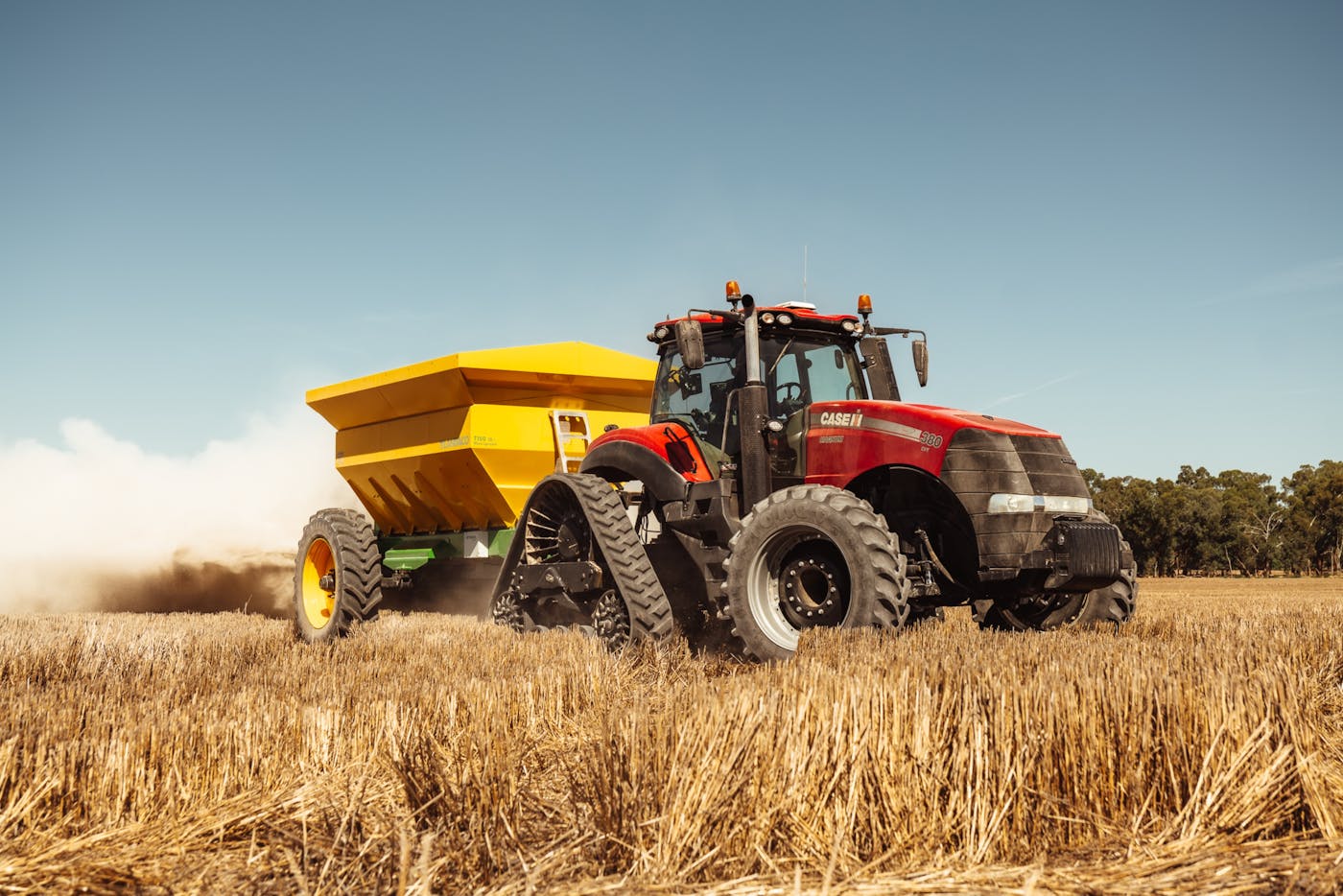
Why low hours make ownership expensive
Machinery costs fall into two groups. Ownership (fixed) costs are depreciation, interest or the opportunity cost of the capital, taxes where they apply, insurance and housing. Operating (variable) costs are repairs, fuel, lubrication and labour. The first group is paid every year regardless of use; the second rises with the hours worked.
Iowa State University's Ag Decision Maker guide, Estimating Farm Machinery Costs (revised March 2026), works through an example. A 300 PTO hp tractor bought for $350,000, kept for 12 years and used 400 hours a year has an estimated salvage value of $112,000 (28% of its $400,000 list price). Using a 4% real interest rate, the annual depreciation-and-interest charge comes to $29,946. Adding 1% of average value for taxes, insurance and housing gives a total ownership cost of $32,256 a year, which is $80.64 per hour at 400 hours.
Now apply the same logic to a machine that works far less. If an implement's annual ownership cost were spread over 100 hours instead of 400, the ownership cost per hour would be roughly four times higher (a little less in practice, because lower use slows depreciation). That is the core reason a drill used for two weeks a year, or a baler used for a handful of days, is often cheaper to hire or share than to own outright.
The four options, and when each fits
Owning gives full control over timing, which matters most for jobs where a few days' delay costs yield or quality, such as drilling, silage and combining. It suits machines that work many hours, that the farm can maintain well and that are needed at the same moment every neighbour needs them.
Hiring from a dealer or plant hire firm suits occasional, predictable tasks: a mini-digger for drainage, a telehandler during building work, a hedge cutter for a short season. Check what the hire rate includes, as delivery, insurance, damage waivers and fuel are often extra.
Sharing with neighbours, informally or through a machinery ring, spreads ownership costs over more hours. It works best for machines where the timing clash is manageable, such as a muck spreader, a grass harrow, a subsoiler or a precision sprayer with the operators trained to use it.
Using a contractor removes ownership cost, labour and operator training from your books in one step. The risk is timing: in a tight weather window, you are in a queue. A good relationship, early booking and a willingness to fit around the contractor's route all help.
A worked comparison you can repeat
To compare options fairly, put every route on a cost-per-hectare (or per-acre) basis for the same job. For ownership, add annual ownership cost to operating costs for the area you cover, then divide by the area. For hire, add the hire charge, delivery, fuel and your own labour. For a contractor, use their quoted rate, and remember it already includes their labour, fuel and machine.
In the UK, the National Association of Agricultural Contractors publishes an annual Contracting Prices guide from a member survey. Farmers Weekly's report on the 2026-27 guide gives an average rise of 4.84% over the year, with rates based on red diesel at 70p per litre (excluding AdBlue) and a recommendation that contractors add a fuel surcharge when diesel costs more than that. The NAAC stresses the figures are only a guide: actual rates vary with region, soil type, distance travelled, job size, equipment and the amount of product applied. Use it as a benchmark, then get local quotes. In the US, many state extension services publish custom rate surveys that serve the same purpose.
Finally, put a value on timeliness. If waiting three days for a contractor or a shared drill could cost yield, add an allowance for that risk. It is the factor most often left out of the sums, and the one that usually tips high-value, time-critical jobs back towards ownership.
- Annual ownership cost (depreciation, interest, insurance, housing) divided by hectares covered.
- Plus operating cost per hectare: fuel, repairs, lubrication, labour.
- Compare with hire (all-in) and contractor rates for the same job.
- Add a timeliness allowance for jobs where delay costs yield or quality.
- Check the answer at the area you really cover, not the area you hope to cover.
Setting up a sharing agreement
Most sharing arrangements fail over the same things: who goes first, who pays for a breakdown, and who left it dirty. Agree these in writing before the machine is bought. A simple one-page agreement signed by each party is far better than good intentions.
- Ownership shares and how the purchase, finance and eventual sale are split.
- Booking rules for the busy season, such as rotating first use each year or booking by field condition.
- How costs are charged: per hour, per hectare or a fixed annual share, and how the hour meter is recorded.
- Repair responsibility: routine wear shared, damage from misuse paid by the user.
- Servicing: who does it, at what intervals, and where records are kept.
- Insurance: who insures the machine and whether each user's policy covers borrowed or jointly owned kit.
- Operator competence: who may use it and what training they need.
- Exit terms: how a partner leaves and how their share is valued.
Biosecurity and weed seeds
Machines that travel between farms can carry disease and weed seeds. GOV.UK guidance for livestock keepers says to clean and disinfect all shared and hired equipment before and after use, and to clean and disinfect vehicles and trailers, preferably with a power hose, paying attention to hidden areas such as wheel arches. It points to Defra's list of approved disinfectants for when and how to use them.
For arable kit, combines, balers and cultivators can move weed seeds, including herbicide-resistant populations, from one farm to the next. Agree that shared machines are blown down or washed before leaving each farm, and plan the order of work so that clean fields are done before known problem fields where possible.
Checks before hiring or borrowing a machine
Treat any hired or shared machine as if you were buying it for a day. Walk round it, check tyres, hydraulic hoses, guards and PTO shafts, and confirm that lights and indicators work before it goes on the road. Test it under load early in the job, because some faults only show when the machine is working hard; our used tractor inspection checklist covers what to look for.
Before committing to buy a share in a new machine, compare the specifications of candidate models on FarmFleets search, paying attention to working width, power requirement and hydraulic demands, so the machine suits every partner's tractors and not just one. For the wider view of how machinery spending affects margins, see our guide to farm input costs and machinery decisions.
Sources
Sources checked 2026-09-25
- Iowa State University Ag Decision Maker: Estimating Farm Machinery Costs (A3-29) — checked 2026-09-25
- NAAC: Contracting Prices Guide — checked 2026-09-25
- Farmers Weekly: NAAC contractor price guide 2026-27 — checked 2026-09-25
- GOV.UK: Disease prevention for livestock keepers — checked 2026-09-25
Corrections and feedback
See our Corrections Policy, contact the team, or Report incorrect information.
Compare machines before you buy.
Use FarmFleetSpecs to check specs, photos, source confidence and recorded recall notices for tractors, combines and other farm equipment.