
Regenerative farming machinery: practical kit, not magic
Moving to less tillage, cover crops and living roots changes which machines a farm needs. This guide sets out the kit that matters, the soils where it works best, the compaction rules to respect and the support available in England.
The editorial team that prepares and reviews FarmFleetSpecs reports and guides.
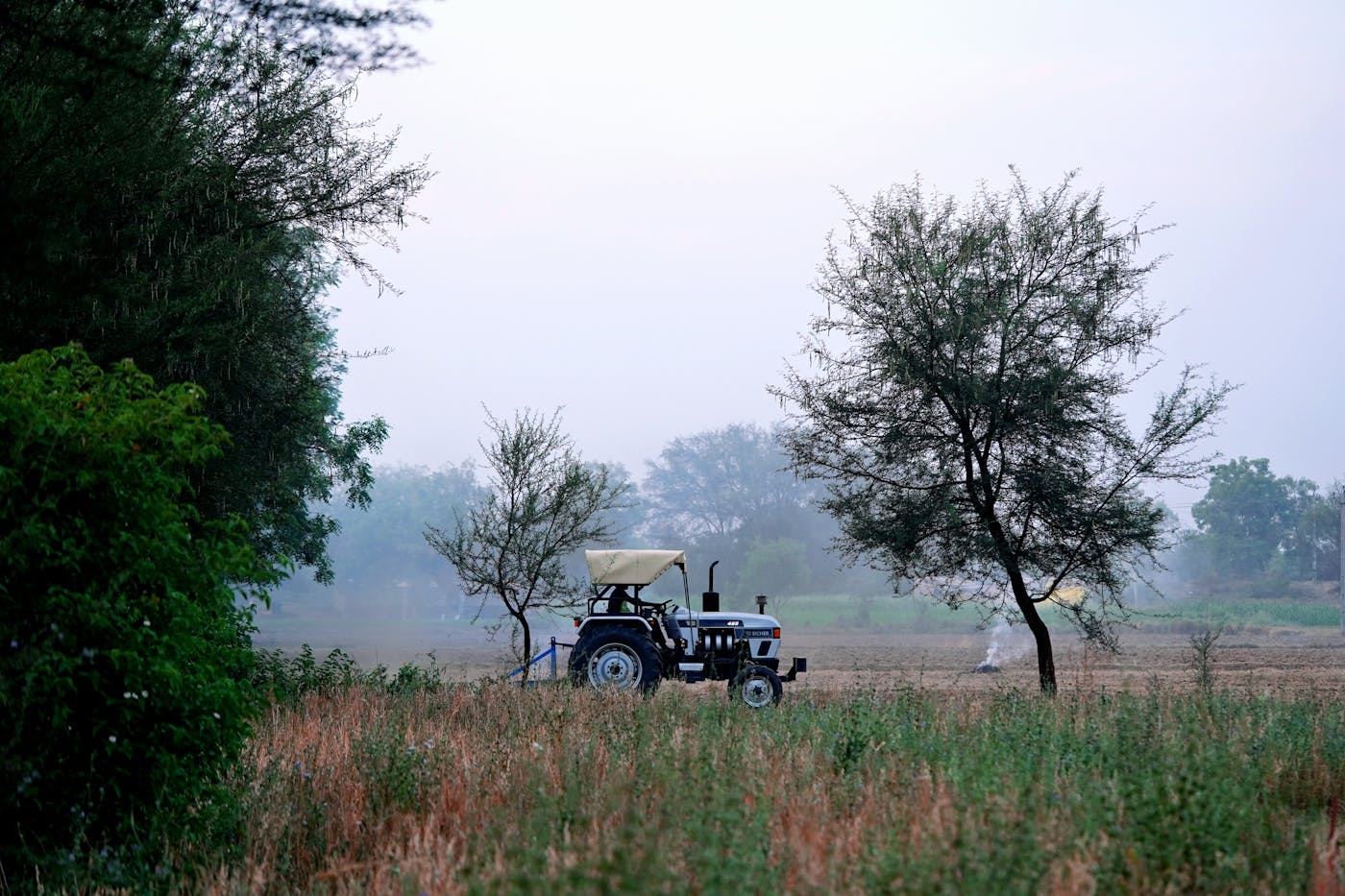
What changes on the machinery side
Regenerative farming is a set of principles rather than a legal definition: disturb the soil less, keep it covered, keep living roots in the ground for longer, diversify the rotation and, where it fits, integrate livestock. Most of those principles are agronomic. The machinery consequences show up mainly at establishment and in how you manage traffic and residue.
The typical shift is from a plough or deep cultivator followed by a power harrow and drill, to one-pass establishment with a direct drill or a strip-till rig. Fewer passes mean less fuel and labour per hectare, but the drill has to do more: cut through residue, place seed at an even depth in firmer soil and close the slot.
Choosing an establishment system
AHDB describes three broad reduced-tillage approaches. Non-inversion tillage loosens soil at depth without turning it over, leaving a weathered tilth near the surface. Strip tillage cultivates only the strip where the crop row will grow. Direct drilling establishes the crop in one pass, straight into land that has had no prior cultivation.
Soil type should drive the choice. AHDB's review found that soils with good drainage and a stable structure, such as clays and loams, gave the best opportunity for reduced tillage, while on silty and sandy soils capping and slumping can cause problems, particularly with direct drilling. It also notes that reduced-tillage soils resist and recover from compaction better than ploughed soils, with lower erosion and run-off risk, and that an occasional more intensive cultivation does not necessarily undo long-term gains.
- Disc drills: low disturbance and good in heavy residue, but can 'hairpin' straw into the slot and may struggle in wet clay.
- Tine drills: more tilth around the seed and better on some wetter soils, with more disturbance and more weed seed germination.
- Strip-till rigs: suit wide-row crops such as maize, sugar beet and oilseed rape, often with fertiliser placed in the strip.
- Stubble rakes and straw harrows: shallow residue spreading and weed germination without cultivation.
Compaction: the rule that outlasts any system
Less cultivation means you cannot rely on a deep pass to fix compaction every year, so preventing it becomes central. AHDB's guidance on soil compaction from machinery sets out the key limits. Wheel loads greater than 3.5 tonnes can cause serious, permanent, deep-seated compaction, even on large low-pressure tyres. Under wet conditions, compaction reaches deeper as wheel load and tyre pressure rise; AHDB describes the depth of compaction increasing by about 8 cm for each doubling of inflation pressure above 1 bar.
Practical steps include larger tyres at lower pressures, lighter machines and axle loads, avoiding field work for about 48 hours after heavy rain, keeping drains and ditches working, using established wheelings or reduced-traffic systems, and using separate field entrances and exits. When comparing tractors for a lower-disturbance system, look closely at operating weight and tyre options rather than headline horsepower; the FarmFleets tractor category and compare tool show both.
Support in England: SFI26 and FETF
Under the Sustainable Farming Incentive 2026, action SOH1, no-till farming, paid £73 per hectare per year. Its rules are strict. All seeds must be sown with a no-till direct drill, which can include tine, disc or precision seed drills or broadcasting equipment, and any following harrow tines must face rearwards. Conventional and shallow min-till cultivators are not allowed, apart from a stubble rake or straw harrow with rearward-facing tines. Strip tillage does not qualify. Low-disturbance subsoiling and mole draining are permitted where needed, except on land with historic or archaeological features, and you must keep evidence when you do them.
SFI26 also included CSAM2, a multi-species winter cover crop, at £129 per hectare per year, which can be combined with SOH1 on the same land. Both SFI26 windows closed by 22 September 2026, and Defra plans to offer an SFI scheme in 2027. On the equipment side, the FETF 2026 productivity list included a direct drill (FETF44) with an expected average cost of £30,135 at a 50% grant rate, a 6 m stubble rake (FETF208, £16,800 at 40%) and a cover crop roller (FETF110, £4,880 at 40%). FETF 2026 is closed, and Defra has said future grants will be combined into a new scheme from 2027.
A staged transition plan
Changing a whole farm's establishment system in one season is a large financial and agronomic risk. A staged approach lets you learn on a few fields while the rest of the farm carries on.
- Dig soil pits in representative fields first and note structure, compaction layers and drainage before changing anything.
- Deal with existing compaction and drainage problems before moving to direct drilling; a drill cannot fix a pan.
- Borrow, hire or use a contractor's direct drill on two or three fields before buying.
- Manage residue at harvest: chop and spread straw evenly across the full header width.
- Agree a slug and grass-weed plan with your agronomist before the first crop, because a change of establishment system changes how both are managed.
- Record establishment counts, yields, fuel and hours for each system so the comparison is based on your own farm.
Costs and what to expect
AHDB's review lists lower operating costs and faster work among the advantages of reduced tillage, and found wheat yields relatively robust across cultivation systems, with some other cereals yielding less than after ploughing. It also notes the lack of disturbance can concentrate phosphorus and nitrate in the surface layer and may acidify that layer over time, so soil sampling by depth becomes more useful.
The machinery saving usually comes from selling or not replacing cultivation kit and from fewer tractor hours. The cost comes from a more capable drill, possibly a change in tractor size, and a period of learning. Run the numbers per hectare using your own hours and fuel, and use the FarmFleets search to compare the power and weight needed to pull the drill widths you are considering.
Sources
Sources checked 2026-09-25
- AHDB, Reduced tillage on arable land — checked 2026-09-25
- AHDB, Soil compaction from machinery — checked 2026-09-25
- GOV.UK, SFI26 actions (print version) — checked 2026-09-25
- GOV.UK, Productivity items and specifications, FETF 2026 — checked 2026-09-25
Corrections and feedback
See our Corrections Policy, contact the team, or Report incorrect information.
Compare machines before you buy.
Use FarmFleetSpecs to check specs, photos, source confidence and recorded recall notices for tractors, combines and other farm equipment.