
Compare/John Deere 2650 vs John Deere 3420
Search

John Deere 2650 vs John Deere 3420

Verdict: John Deere 2650 vs John Deere 3420

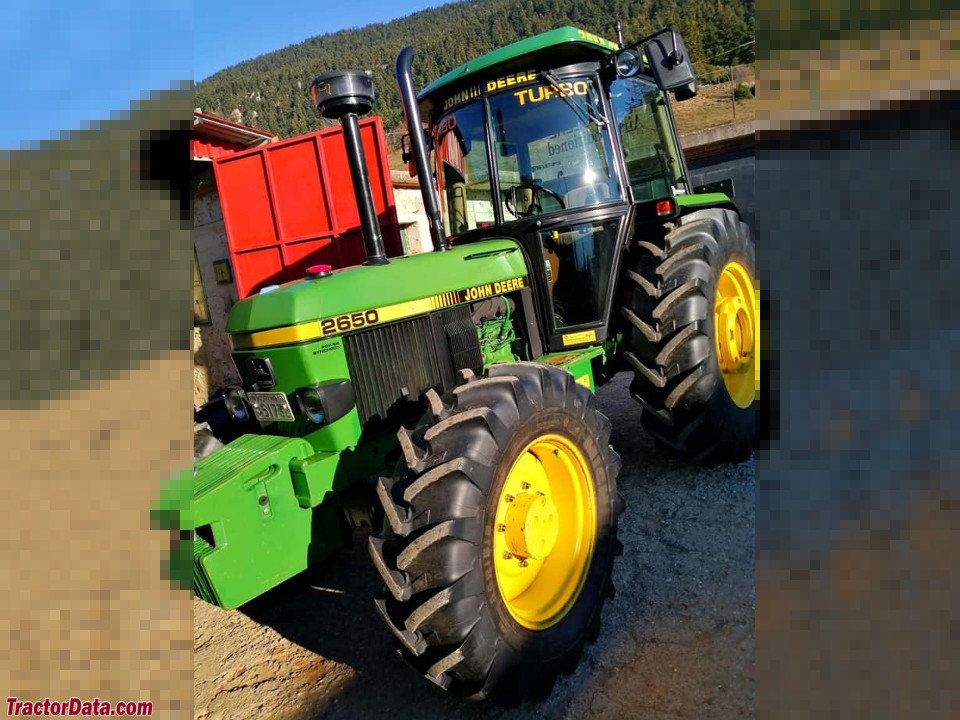
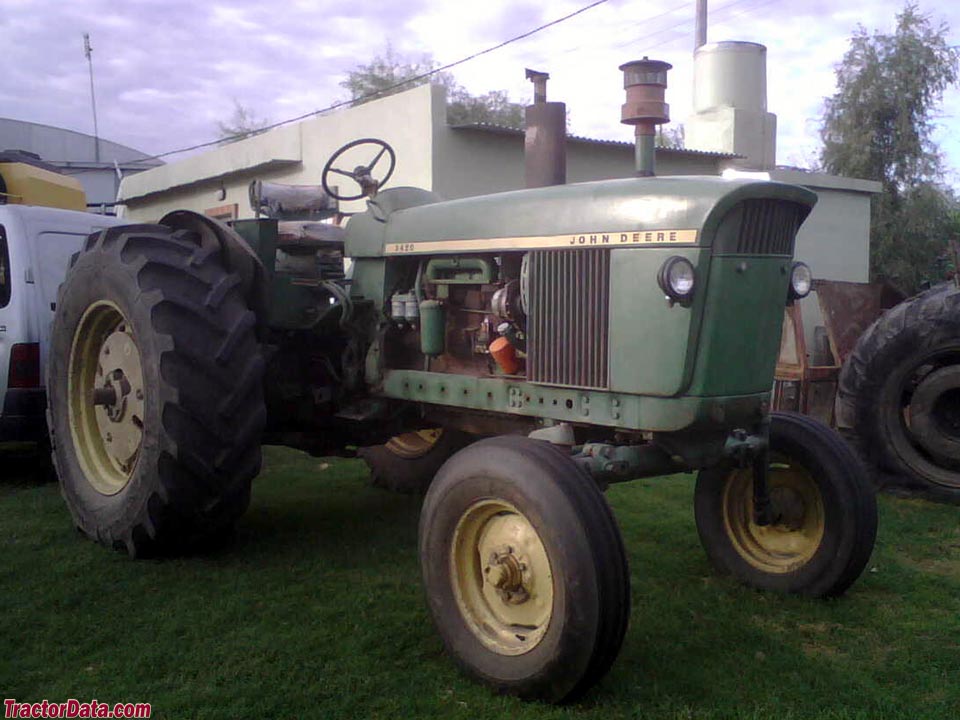
The John Deere 2650 and the John Deere 3420 are both tractors — here is how they stack up on the figures that matter. John Deere 2650 leads on rated power with 78 hp against 77 hp. John Deere 3420 is the lighter machine (3,478 kg vs 7,694 kg), which helps on soft ground and transport, while the heavier model carries more ballast for traction-limited draft work. John Deere 3420 holds more fuel (129.1 L vs 84.0 L) for longer stints between fills. John Deere 2650 is the newer design (1987 vs 1970). In short: choose the John Deere 2650 for outright pulling power, or the John Deere 3420 if a tighter budget and lighter footprint matter more. Compare the full spec tables below before booking a demo.
Tune the fit score
Tell us about your operation
Fit & specs
John Deere 2650 Tractor
John Deere
71
Fit score
Best match
Clear
John Deere 3420 Tractor
John Deere
71
Fit score
Best match
Clear
Rated power
78 hp
77 hp
Confidence
98%
98%
Guide price
Overview
Manufacturer
John DeereReference
John DeereReference
With 13.6-38 rear tires.Reference
With 18.4x34 rear tires.Reference
Final drives
planetaryReference
planetaryReference
Engine
Fuel tank
135.9 LReference
129.1 LReference
Engine
58.2 kWReference
57.4 kWReference
Displacement
3.9 LReference
5.0 LReference
Bore/Stroke
106 x 110 mmReference
102 x 110 mmReference
Power
58.2 kWReference
57.4 kWReference
Air cleaner
dryReference
dryReference
Rated RPM
2300Reference
2500Reference
Starter volts
12Reference
12Reference
Starter power
3.0 kWReference
Coolant capacity
15.0 LReference
Compression
16.7:1Reference
Torque
299.7 NmReference
Torque RPM
1250Reference
Transmission
Transmission
Hi-LoReference
Syncro-RangeReference
Gears
16 forward and 8 reverseReference
8 forward and 2 reverseReference
PTO & Hydraulics
Type
two-speed power shiftReference
closed centerReference
Pressure
190.0 barReference
Pump flow
43.9 lpmReference
Rear Type
IIReference
IIReference
Control
position and draft controlReference
Rear lift (at 24"/610mm)
1875 kgReference
Front Hitch
IIReference
Front lift
790 kgReference
Rear PTO
independentReference
Clutch
cerametallic discReference
Rear PTO Type
540/1000Reference
540Reference
Engine RPM
1000@2172Reference
Front PTO
independentReference
Front PTO Type
1000Reference
Dimensions
2WD Wheelbase
226 cmReference
4WD Wheelbase
228 cmReference
Weight
7694 to 8378 poundsReference
3478 kgReference
Front tire
7.50-18Reference
6.00x16Reference
2WD Rear tire
13.6R38Reference
2WD Standard tires (ag)
Front: 7.50-18. Rear: 13.6R38Reference
4WD Standard tires (ag)
Front: 11.2-28. Rear: 13.6R38Reference
Length
419 cmReference
408 cmReference
Width
205 cmReference
Height (cab)
266 cmReference
2WD Shipping weight
3489 kgReference
4WD Shipping weight
3800 kgReference
2WD Clearance (front axle)
65 cmReference
4WD Clearance (front axle)
49 cmReference
2WD Front tread
135 to 200 cmReference
4WD Front tread
150 to 200 cmReference
Rear tread
150 to 199 cmReference
Wheelbase
255 cmReference
Rear tire
18.4x34Reference
Ag front
7.50x18Reference
Ag rear
23.1x26Reference
Height (hood)
170 cmReference
Height (exhaust)
224 cmReference
Shipping weight
3478 kgReference
Ground clearance
34 cmReference
Electrical
Ground
negativeReference
Charging amps
44Reference
28Reference
Batteries
2Reference
2Reference
Battery volts
12Reference
6Reference
Battery AH
55Reference
Charging system
alternatorReference
Speeds
3420 Serial Numbers
Location:
Serial number plate below the steering column.Reference

Fit score weighs budget, operation size, crop match and data confidence against the details above. It’s guidance, not advice — always confirm with a dealer demo.

Comparing 0
Compare (pick 2+)