Search
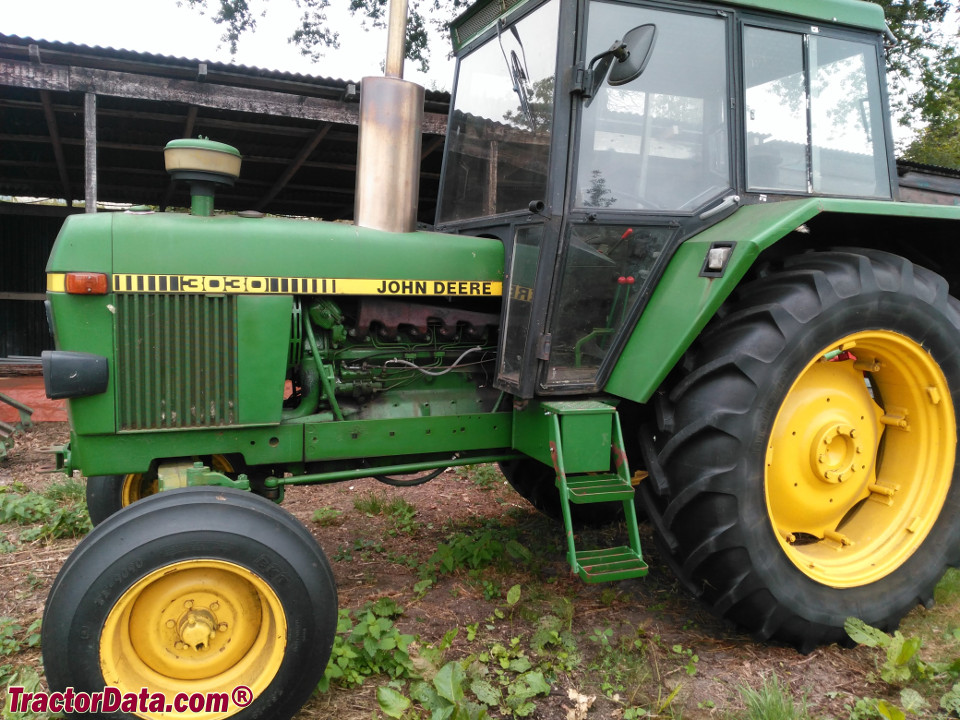
John Deere 3030 vs John Deere 6110J
Verdict: John Deere 3030 vs John Deere 6110J
The John Deere 3030 and the John Deere 6110J are both tractors — here is how they stack up on the figures that matter. Both are rated at the same 94 hp. John Deere 3030 is the lighter machine (7,297 kg vs 9,125 kg), which helps on soft ground and transport, while the heavier model carries more ballast for traction-limited draft work. John Deere 6110J is the newer design (2010 vs 1978). Use the full side-by-side spec tables below to weigh the details against your own operation, and confirm with a dealer demo.
Tune the fit score
Tell us about your operation
Fit & specs
John Deere
94
Fit score
Best match
Clear
John Deere
94
Fit score
Best match
Clear
Rated power
94 hp
94 hp
Confidence
98%
98%
Guide price
—
—
Overview
Manufacturer
John DeereReference
John DeereReference
With 16.9-38 rear tires and 25KPH transmission option.Reference
With 23.1-30 R1 rear tires. Reverse speeds are 15% faster than forward.Reference
Final drives
planetaryReference
—
Differential lock
mechanical rearReference
electro-hydraulicReference
Variants
3030LS
12-speedReference
—
Engine
Engine (gross)
69.9 kWReference
—
Engine (net)
63.0 kWReference
—
Displacement
5.4 LReference
4.5 LReference
Bore/Stroke
102 x 110 mmReference
105 x 127 mmReference
Power (net)
63.0 kWReference
—
Power (gross)
69.9 kWReference
—
Fuel system
direct injectionReference
rotary injection pumpReference
Air cleaner
dryReference
—
Compression
16.8:1Reference
—
Rated RPM
2500Reference
2300Reference
Idle RPM
750-2660Reference
—
Operating RPM
1200-2500Reference
—
Torque
285.0 NmReference
429.0 NmReference
Torque RPM
1200Reference
1400Reference
Starter volts
12Reference
12Reference
Oil capacity
57.0 LReference
12.0 LReference
Coolant capacity
19.0 LReference
20.0 LReference
Fuel tank
—
152.0 LReference
Engine
—
82.0 kWReference
Power
—
82.0 kWReference
Transmission
Transmission
Hi-LoReference
John Deere PowrQuadReference
Gears
12 forward and 6 reverseReference
16 forward and reverseReference
Clutch
dry discReference
hydraulic wet discsReference
PTO & Hydraulics
PTO (claimed)
57.0 kWReference
70.1 kWReference
Hydraulic system
56.8 LReference
—
Type
closed centerReference
partial power shiftReference
Capacity
56.8 LReference
—
Pressure
155.0 barReference
200.0 barReference
Pump flow
46.9 lpmReference
65.0 lpmReference
Rear Type
IIReference
IIReference
Control
position and draft controlReference
electronic lower linkReference
Rear lift
3380 kgReference
—
Rear PTO
independentReference
independentReference
Rear PTO Type
540/1000Reference
540Reference
Engine RPM
1000@2170Reference
—
Valves
—
2Reference
SCV flow
—
60.0 lpmReference
Oil type
—
JD Hy-GardReference
Rear lift (at ends)
—
3800 kgReference
Rear lift (at 24"/610mm)
—
2500 kgReference
Capacities
Fuel
106.0 LReference
—
Max capacity
6000 kgReference
—
Dimensions
Wheelbase
246 cmReference
240 cmReference
Weight
7297 to 8069 poundsReference
9125 to 10380 poundsReference
Front tire
7.50-20Reference
14.9-26Reference
2WD Rear tire
16.9-38Reference
—
2WD Standard tires (ag)
Front: 7.50-20. Rear: 16.9-38Reference
—
4WD Standard tires (ag)
Front: 11.2-24. Rear: 16.9-38Reference
—
Length
400 cmReference
456 cmReference
Width
203 cmReference
—
Height (ROPS)
268 cmReference
—
Height (cab)
273 cmReference
—
Shipping
3309 kgReference
—
Rear tire
—
23.1-30Reference
Standard tires (ag)
—
Front: 14.9-26. Rear: 23.1-30Reference
Optional tires (ag)
—
Front: 12.4-36. Rear: 13.6-46Reference
Height
—
267 cmReference
Ground clearance
—
50 cmReference
Bar rear axle
—
86 by 2438 mmReference
Front tread
—
151 to 205 cmReference
Rear tread
—
165 to 240 cmReference
Ballasted
—
6001 kgReference
3030 Serial Numbers
Location:
Serial number plate on the right side of the Deere 3030 tractor frame, above the front axle.Reference
—
Electrical
Ground
negativeReference
negativeReference
Charging system
alternatorReference
alternatorReference
Charging amps
28Reference
90Reference
Batteries
2Reference
—
Battery volts
12Reference
12Reference
Battery AH
55Reference
100Reference
Speeds
Fit score weighs budget, operation size, crop match and data confidence against the details above. It’s guidance, not advice — always confirm with a dealer demo.