Search
Kubota M7950 vs Kubota MD87
Verdict: Kubota M7950 vs Kubota MD87
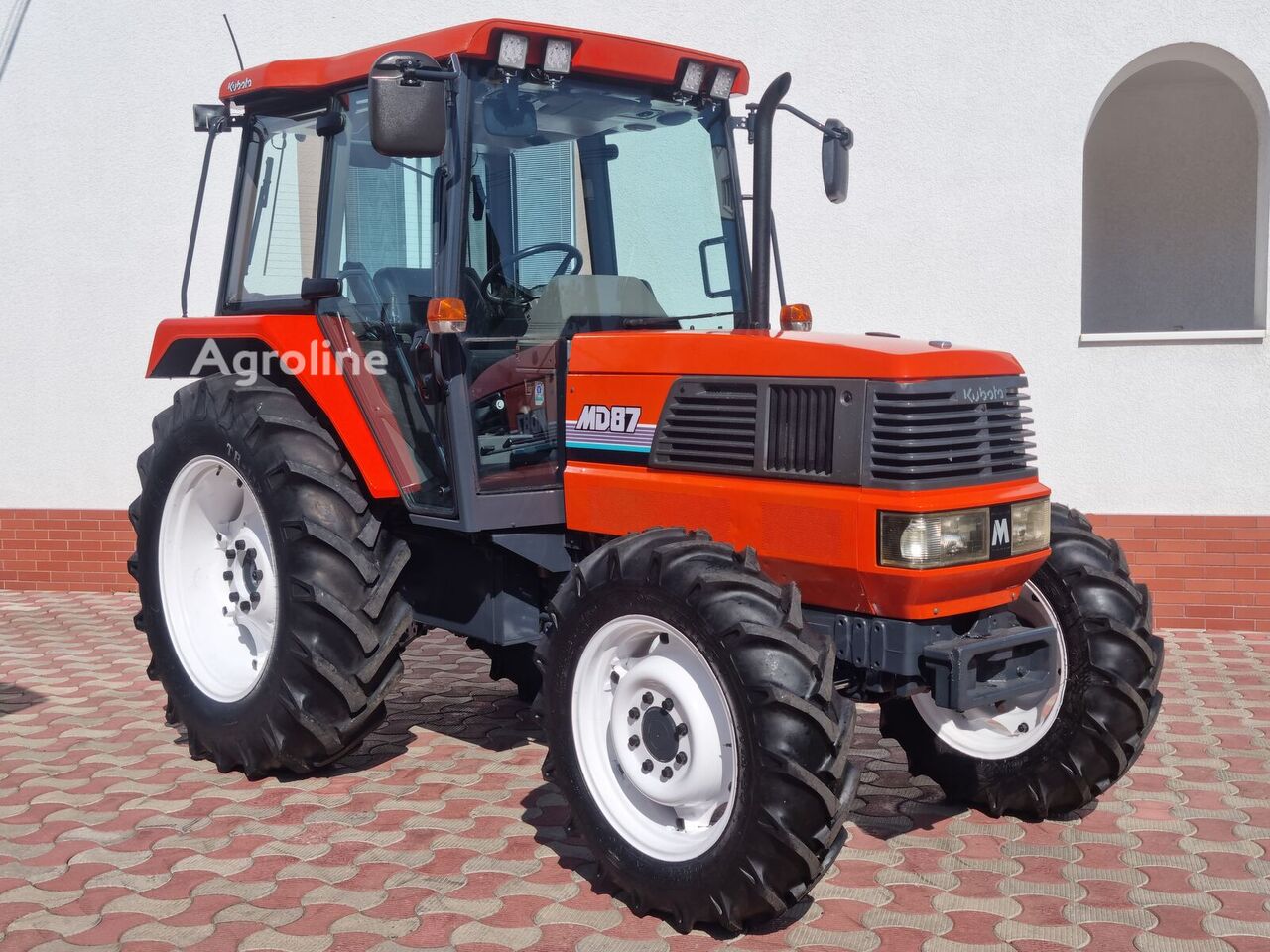
The Kubota M7950 and the Kubota MD87 are both tractors — here is how they stack up on the figures that matter. Both are rated at the same 81 hp. Kubota M7950 is the lighter machine (5,960 kg vs 6,812 kg), which helps on soft ground and transport, while the heavier model carries more ballast for traction-limited draft work. Kubota MD87 is the newer design (1995 vs 1983). Use the full side-by-side spec tables below to weigh the details against your own operation, and confirm with a dealer demo.
Tune the fit score
Tell us about your operation
Fit & specs
Kubota
71
Fit score
Best match
Clear
Kubota
71
Fit score
Best match
Clear
Rated power
81 hp
81 hp
Confidence
98%
98%
Guide price
—
—
Overview
Manufacturer
KubotaReference
KubotaReference
With 18.4-30 rear tires.Reference
Eight gears in two ranges. Optional creeper range available.Reference
Differential lock
mechanical rearReference
—
Variants
M7950F
2WDReference
—
M7950DT
4WDReference
—
M7950FW
wide-treadReference
—
M7950DTM
mudderReference
—
M7950HC
high-cropReference
—
Engine
Engine (net)
60.4 kWReference
—
Drawbar (tested)
47.0 kWReference
—
Displacement
4.3 LReference
4.7 LReference
Bore/Stroke
109 x 115 mmReference
109 x 125 mmReference
Power (net)
60.4 kWReference
—
Air cleaner
dry elementReference
—
Compression
17:1Reference
—
Rated RPM
2400Reference
2400Reference
Starter volts
12Reference
12Reference
Oil capacity
50.0 LReference
16.3 LReference
Coolant capacity
13.6 LReference
14.5 LReference
Power at rated engine speed
56.3 kWReference
—
Max power
47.0 kWReference
—
Fuel tank
—
104.8 LReference
Engine
—
64.0 kWReference
Power
—
64.0 kWReference
Torque
—
318.8 NmReference
Torque RPM
—
1200Reference
Starter
—
electricReference
Transmission
Gears
12 forward and 4 reverseReference
24 forward and reverseReference
Clutch
dry plateReference
—
PTO & Hydraulics
PTO (claimed)
56.3 kWReference
60.5 kWReference
PTO (tested)
56.3 kWReference
—
Hydraulic system
50.0 LReference
—
Type
synchronizedReference
partial power shiftReference
Capacity
50.0 LReference
—
Pressure
181.3 barReference
—
Valves
1 or 2Reference
—
Total flow
41.6 lpmReference
—
Rear Type
IIReference
IIReference
Rear lift (at ends)
2199 kgReference
—
Rear lift (at 24"/610mm)
2029 kgReference
—
Rear PTO
independentReference
—
Rear PTO Type
540/1000Reference
540/1000 (1.375)Reference
Engine RPM
1000@2389Reference
1000@2211Reference
Power at rated PTO speed
51.7 kWReference
—
Pump flow
—
60.0 lpmReference
Rear lift
—
2585 kgReference
Capacities
Fuel
99.9 LReference
—
Dimensions
2WD Wheelbase
222 cmReference
—
4WD Wheelbase
226 cmReference
—
Weight
5960 to 7100 poundsReference
6812 to 7209 poundsReference
Front tire
7.50-18Reference
9.5-24Reference
2WD Rear tire
18.4-30Reference
—
2WD Standard tires (ag)
Front: 7.50-18. Rear: 18.4-30Reference
—
4WD Standard tires (ag)
Front: 11.2-24. Rear: 18.4-30Reference
—
Length
388 cmReference
388 cmReference
Width
198 cmReference
187 cmReference
2WD Clearance (front axle)
54 cmReference
—
4WD Clearance (front axle)
38 cmReference
—
2WD Front tread
141 to 201 cmReference
—
4WD Front tread
153 to 173 cmReference
—
Front tread
182 to 243 cmReference
133 to 151 cmReference
Rear tread
182 to 243 cmReference
132 to 192 cmReference
2WD Shipping
2703 kgReference
—
4WD Shipping
3091 kgReference
—
Operating
3220 kgReference
—
Ballasted
4674 kgReference
—
2WD Steering wheel
146 cmReference
—
4WD Steering wheel
175 cmReference
—
Wheelbase
—
230 cmReference
Rear tire
—
13.9-36Reference
Standard tires (ag)
—
Front: 9.5-24. Rear: 13.9-36Reference
Height
—
261 cmReference
ROPS Weight
—
3089 kgReference
Cab Weight
—
3270 kgReference
Ground clearance
—
43 cmReference
Kubota M7950 attachments
Electrical
Charging system
alternatorReference
—
Charging amps
65 (with cab)Reference
—
Battery volts
12Reference
12Reference
Battery AH
300Reference
—
Ground
—
negativeReference
Kubota M7950 Height
2WD Exhaust
241 cmReference
—
4WD Exhaust
244 cmReference
—
Test results
Fuel use
17.4 l/hourReference
—
Max pull
4373 kgReference
—
Speeds
Fit score weighs budget, operation size, crop match and data confidence against the details above. It’s guidance, not advice — always confirm with a dealer demo.