
Compare/Minneapolis-Moline 335 vs Minneapolis-Moline Big Mo 500
Search

Minneapolis-Moline 335 vs Minneapolis-Moline Big Mo 500

Verdict: Minneapolis-Moline 335 vs Minneapolis-Moline Big Mo 500

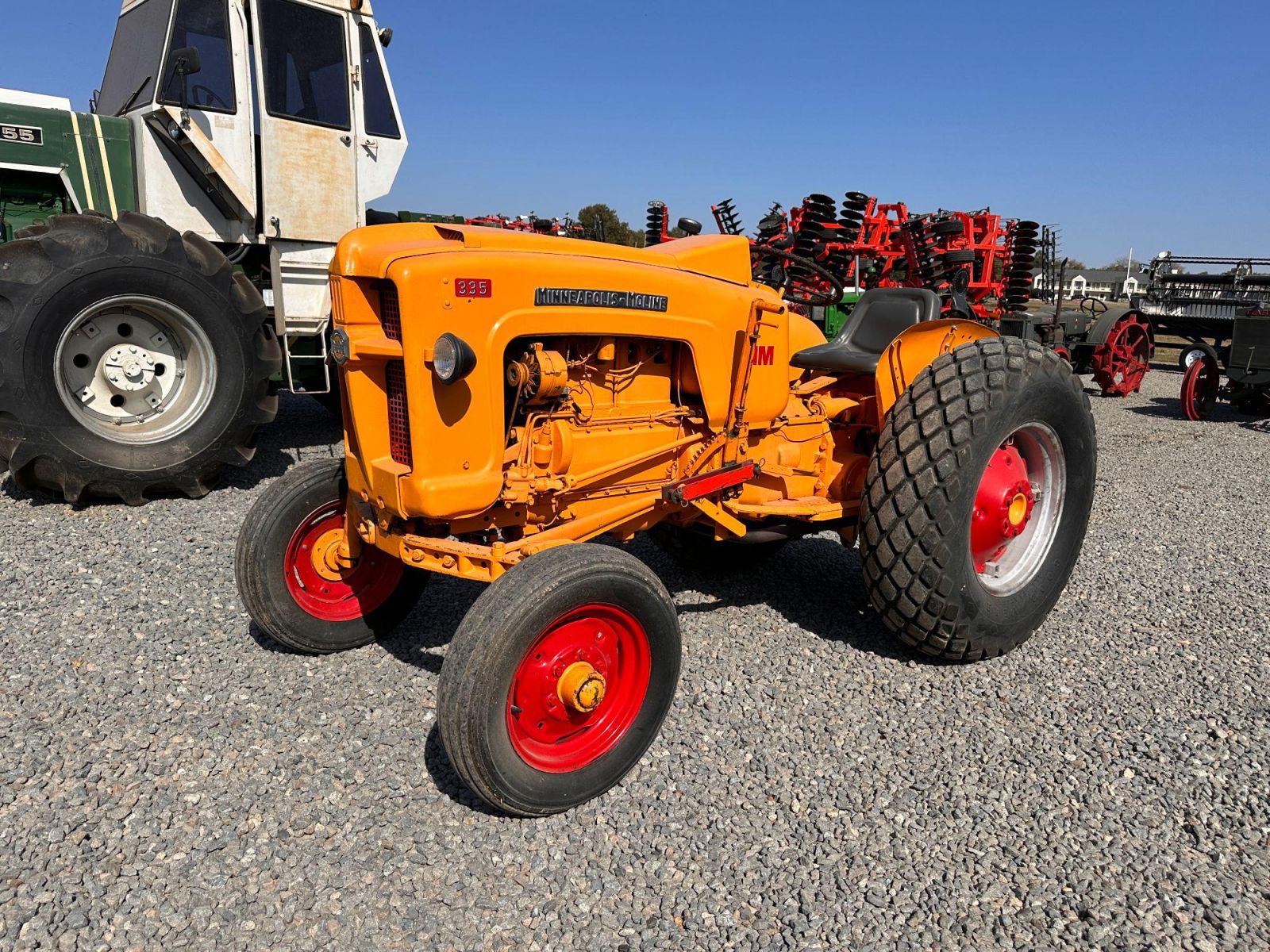
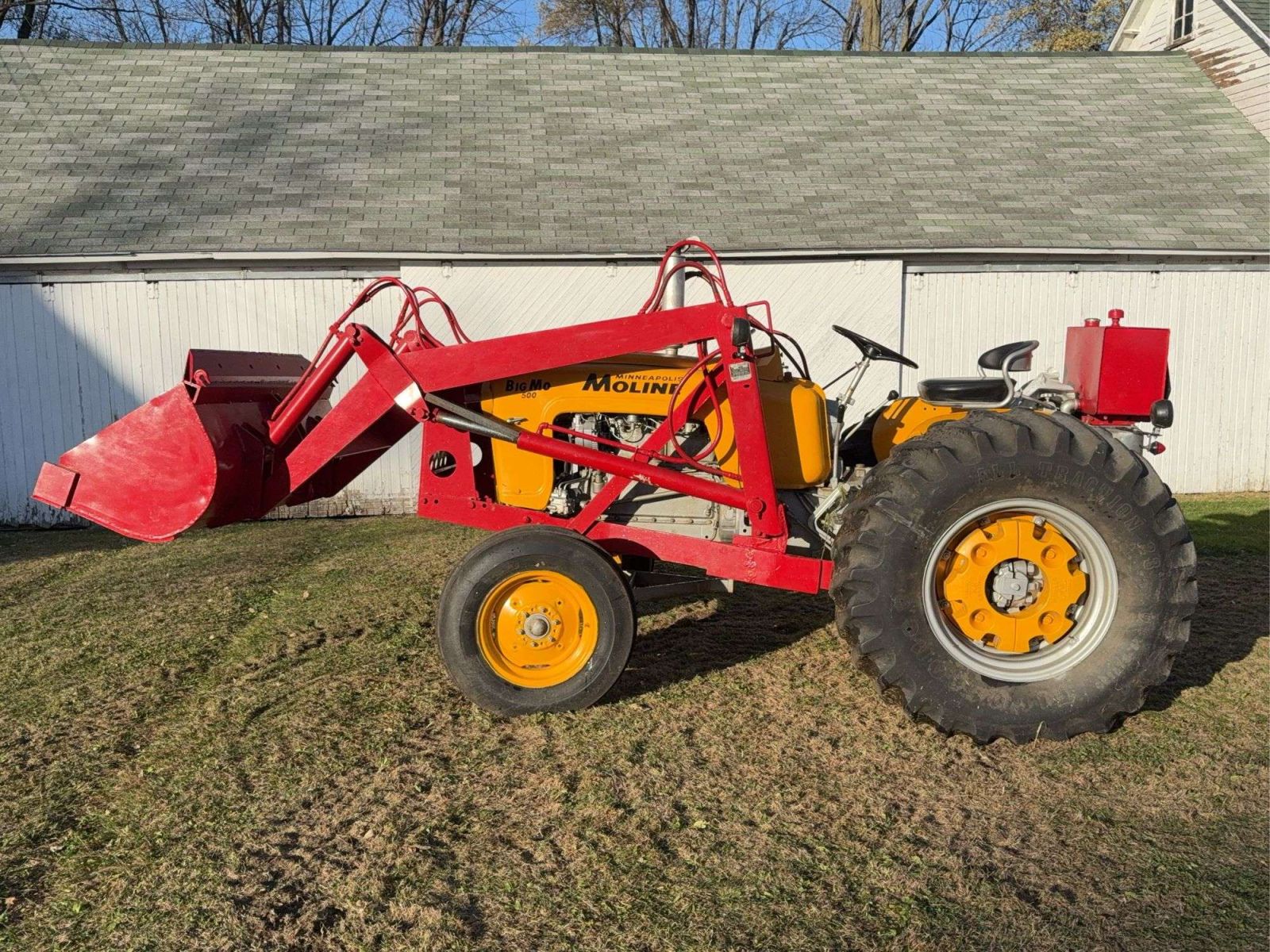
The Minneapolis-Moline 335 and the Minneapolis-Moline Big Mo 500 are both industrial tractors — here is how they stack up on the figures that matter. Minneapolis-Moline Big Mo 500 leads on rated power with 56 hp against 47 hp. Minneapolis-Moline 335 is the lighter machine (1,678 kg vs 4,516 kg), which helps on soft ground and transport, while the heavier model carries more ballast for traction-limited draft work. Minneapolis-Moline Big Mo 500 is the newer design (1960 vs 1957). In short: choose the Minneapolis-Moline Big Mo 500 for outright pulling power, or the Minneapolis-Moline 335 if a tighter budget and lighter footprint matter more. Compare the full spec tables below before booking a demo.
Tune the fit score
Tell us about your operation
Fit & specs
Minneapolis-Moline 335 Industrial Tractor
Minneapolis-Moline
62
Fit score
Best match
Clear
Minneapolis-Moline Big Mo 500 Industrial Tractor
Minneapolis-Moline
62
Fit score
Best match
Clear
Rated power
47 hp
56 hp
Confidence
40%
40%
Guide price
Overview
Manufacturer
Minneapolis-MolineReference
With 10-24 rear tires.Reference
dieselReference
Total built
334Reference
Final drives
bull gearReference
Variants
335
farm tractorReference
335I
industrial tractorReference
4 Star
farm tractorReference
Engine
Fuel tank
53.0 LReference
Engine
35.0 kWReference
41.8 kWReference
Displacement
2.7 LReference
3.4 LReference
Bore/Stroke
92 x 102 mmReference
92 x 127 mmReference
Power
35.0 kWReference
41.8 kWReference
Fuel system
carburetorReference
Air cleaner
oil bathReference
oil bathReference
Compression
7.35:1Reference
Rated RPM
1900Reference
1750Reference
Torque
189.8 NmReference
Torque RPM
1200Reference
Firing order
1-3-4-2Reference
Starter
electricReference
Starter volts
6Reference
12Reference
Oil capacity
6.6 LReference
37.9 LReference
Coolant capacity
10.4 LReference
12.8 LReference
Transmission
Type
two-speed power shiftReference
Gears
10 forward and 2 reverseReference
Clutch
dry discReference
279.4mm mechanical dry discReference
Transmission
Ampli-TorcReference
Ampli-TorcReference
PTO & Hydraulics
Rear Type
IReference
Rear PTO
independentReference
Rear PTO Type
540 (1.375)Reference
Pump flow
75.7 lpmReference
Dimensions
Wheelbase
200 cmReference
195 cmReference
Weight
1678 kgReference
1406 kgReference
Ag front
6.00-16Reference
Ag rear
11-28Reference
Length
311 cmReference
685 cmReference
Height (steering wheel)
148 cmReference
Height (hood)
146 cmReference
156 cmReference
Shipping weight
1678 kgReference
Clearance (front axle)
48 cmReference
35 cmReference
Clearance (rear axle)
45 cmReference
40 cmReference
Front tread
127 to 198 cmReference
140 cmReference
Rear tread
121 to 193 cmReference
144 to 190 cmReference
Front tire
7.50-16Reference
Rear tire
14.9-28Reference
Industrial front
7.50-16Reference
Industrial rear
14.9-28Reference
Max front axle
4536 kgReference
335 Serial Numbers
1957
A1W 11300001Reference
1958
A1W 11300441Reference
1959
A1W 11300522Reference
1960
A1W 11300597Reference
17800001 (diesel)Reference
Location:
Right side of tractor frame.Reference
Right side of transmission.Reference
Capacities
Diameter
21 cmReference
Width
16 cmReference
RPM
1420Reference
Speed
947.93 meters/minReference
Speeds
Minneapolis-Moline Big Mo 500 attachments
Big Mo 500 Serial Numbers
1961
16800161 (gasoline)Reference
1962
16800392 (gasoline)Reference
1963
17800066 (diesel)Reference
1964
17800091 (diesel)Reference
1965
17800116 (diesel)Reference
1966
16800867 (gasoline)Reference
Final
17800145 (diesel)Reference
Attachment overview
Minneapolis-Moline B-13 Backhoe
Backhoe type
Minneapolis-Moline hoe2-model BackhoeReference
Transport height
339 cmReference
Digging depth
457 cmReference
Reach from pivot
529 cmReference
Loading height
323 cmReference
Bucket force
6598 kgReference
Minneapolis-Moline hoe2-model Backhoe

Fit score weighs budget, operation size, crop match and data confidence against the details above. It’s guidance, not advice — always confirm with a dealer demo.

Comparing 0
Compare (pick 2+)