
Cutting farm diesel use: measure, gear up, set slip and match the tractor to the job
A practical routine for reducing fuel per hectare: how to log consumption, when 'gear up and throttle back' works and when it does not, how to measure wheel slip, and what the UK red diesel rules allow.
The editorial team that prepares and reviews FarmFleetSpecs reports and guides.
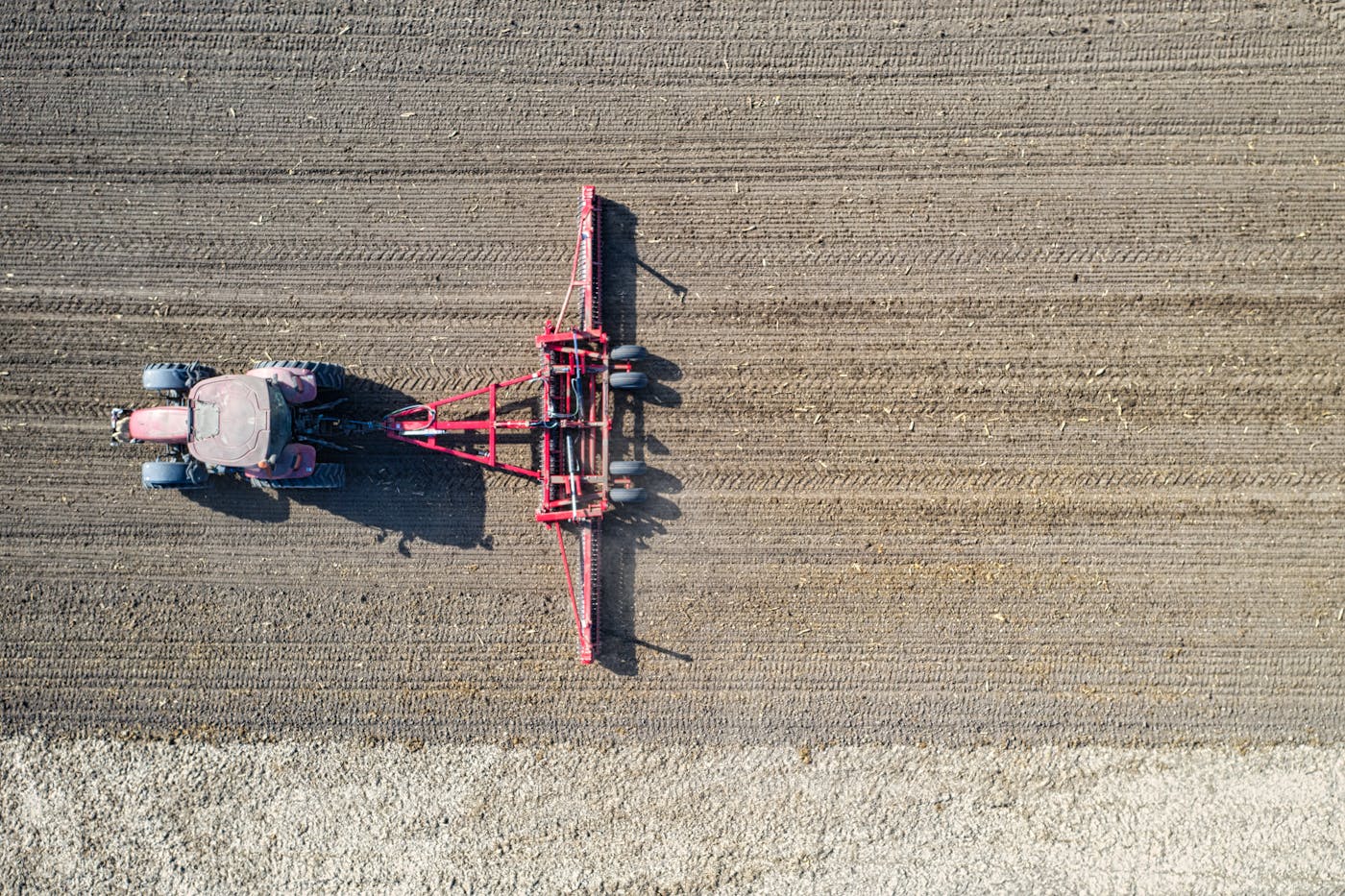
Measure first
Most farms know their annual diesel bill but not where the fuel goes. A simple log changes that. Fill the tractor to the top before a job, record the hectares worked and the hours, and fill to the top again afterwards. The litres added divided by the hectares gives litres per hectare for that operation, tractor and implement. Many modern tractors also display fuel rate and cumulative use, and telematics can log it automatically, but a brim-to-brim check is a good way to confirm the display.
Repeat for the main operations: cultivation, drilling, spraying, spreading, haulage and harvest. Compare the same job across tractors, operators and fields. Large differences usually point to one of the causes below: the wrong gear and engine speed, too much or too little ballast, the wrong tyre pressures, blunt or badly set implements, or a tractor that is too large or too small for the job.
Gear up and throttle back, with care
The Farm Energy programme of the US Cooperative Extension System explains the principle. On light-load work, typically any operation needing less than about 65% of full engine power, you can shift to a higher gear and reduce engine speed to around 70-80% of rated speed while keeping the same forward speed. The engine then does the same work at a more efficient point on its fuel map.
The same guidance sets clear limits. Do not overload or lug the engine; excessive black smoke is a sign it is overloaded, and if the engine does not pick up readily when the throttle is opened, shift down or raise engine speed. Reducing engine speed also reduces PTO speed and hydraulic response, so this approach suits drawbar work such as light cultivation, rolling and haulage, but not PTO jobs that need rated shaft speed unless the tractor has an economy PTO designed for it.
Modern tractors with continuously variable transmissions and engine-transmission management can do much of this automatically. Check that the automatic mode is set up for economy where appropriate, and that operators use it.
Ballast, tyres and wheel slip
Too little ballast lets the wheels spin and wastes fuel; too much increases rolling resistance and compaction. Farm Energy's guidance is that peak tractive efficiency occurs between about 8% and 15% slip depending on soil, and that for every 1% of slip beyond the optimum you lose roughly 1% in productivity and energy efficiency.
You can measure slip with a tape and a marker:
- Put a clear mark on the rear tyre that you can see from the seat.
- Measure the tyre's rolling circumference with a string around the centre of the tread.
- Mark out a fixed distance in the field, for example 30 m, and drive it at working depth and speed, counting wheel turns.
- Multiply the turns by the circumference to get the distance the tyre 'travelled', subtract the real distance, and divide by the real distance to get slip as a percentage. Farm Energy's example: a 14 ft tyre turning 7.75 times over 100 ft gives about 8.5% slip.
- If slip is above about 15%, add ballast, check pressures, fit duals or replace worn tyres; if it is below about 10%, remove ballast and check pressures.
- Set tyre pressures to the tyre maker's load and speed tables for the actual axle loads, not a single yard pressure for all work. Our tyre pressure and ballast guide covers this in detail.
Match the machine to the job
A large tractor on light work spends its day at part load; a small tractor on heavy work runs at full load and may slip more. Where you have a choice, pair the implement with the tractor whose power it actually needs, and use the smaller tractor for haulage, rolling and light spraying. When buying, compare the power and weight of candidate tractors against the implements you run most, using the FarmFleets machine search, and consider whether fewer, lighter passes are possible; see our tillage systems guide.
Implements matter too. Sharp, correctly set points, discs and knives pull more easily than worn ones. Working deeper than needed costs fuel with no benefit, so check cultivation depth against the reason for the pass.
Servicing and small fixes
Routine maintenance rarely makes headlines, but a tractor with a restricted air filter, dirty fuel or a clogged cooler burns more fuel for the same work. These checks are cheap and quick.
- Replace air filters at the intervals in the operator's manual, and more often in dusty conditions.
- Keep fuel clean: drain water from separators and storage tanks, replace fuel filters on schedule, and keep tank caps sealed.
- Fix fuel and hydraulic leaks promptly.
- Check that coolers and radiators are clean, so fans are not working harder than needed.
- Reduce idling: set the engine to shut down after a period of idle where the tractor allows it, and switch off rather than idling during breaks.
- Plan field routes and headland turns to cut empty running, and use guidance to reduce overlap; see our GPS guidance guide.
UK red diesel rules
Most sectors lost the right to use rebated (red) diesel from 1 April 2022, but agriculture kept it. HMRC's Excise Notice 75 allows rebated diesel in agricultural vehicles, which include tractors and certain vehicles used only for agricultural, horticultural or forestry purposes, when used for agriculture, horticulture, forestry or fish farming, and for cutting verges, hedges and trees bordering public roads. Contractors engaged to carry out agricultural, horticultural or forestry operations are covered. Using red diesel for other work, such as non-agricultural haulage or construction, can breach the rules, so check Excise Notice 75 before taking on diversified work with farm vehicles.
Alternative powertrains are covered in our guide to electric and hybrid farm machines, and wider cost planning in our farm input costs guide.
Sources
Sources checked 2026-09-25
- Farm Energy (Cooperative Extension): Gear up and throttle back to save fuel — checked 2026-09-25
- Farm Energy (Cooperative Extension): Optimize wheel slip to save fuel — checked 2026-09-25
- HMRC: Using rebated fuels in vehicles and machines (Excise Notice 75) — checked 2026-09-25
- HMRC: Changes to rebated diesel and biofuels from 1 April 2022 — checked 2026-09-25
Corrections and feedback
See our Corrections Policy, contact the team, or Report incorrect information.
Compare machines before you buy.
Use FarmFleetSpecs to check specs, photos, source confidence and recorded recall notices for tractors, combines and other farm equipment.