Tyre pressure and ballast: getting tractor setup right
Two identical tractors can do very different work depending on their tyres, pressures and weights. Here is how to set pressure from real axle loads, ballast to a sensible wheel slip, and avoid the common mistakes.
The editorial team that prepares and reviews FarmFleetSpecs reports and guides.
Why setup matters more than horsepower
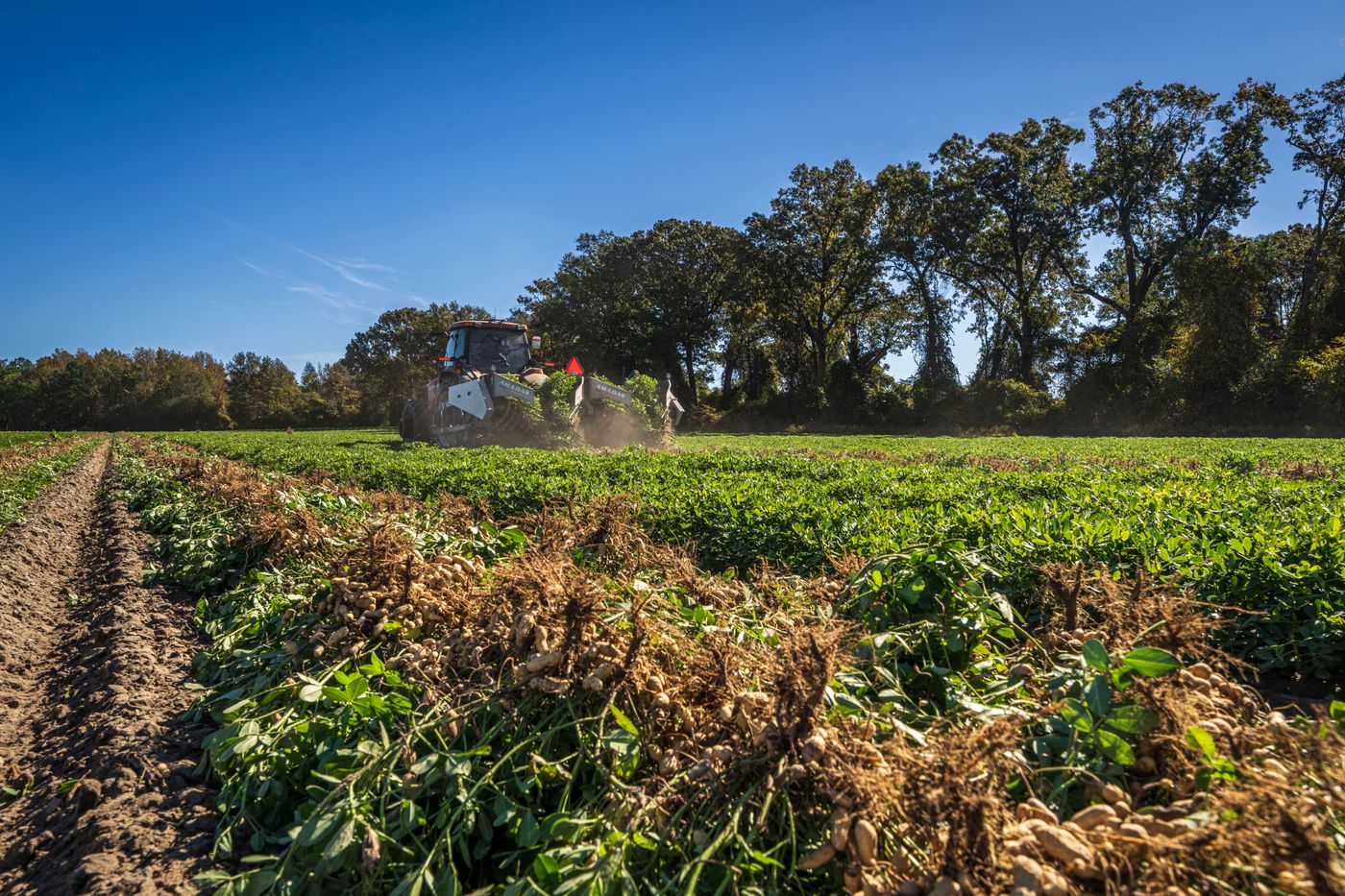
A tractor's engine power is only useful if it reaches the ground. Tyres, pressures and ballast decide how much of that power turns into pull rather than wheel spin, rolling resistance or soil damage. Get the setup right and the tractor pulls cleanly, uses less fuel and treads more gently. Get it wrong and you waste diesel, wear tyres and compact the ground you depend on.
The good news is that setup costs little. A quality pressure gauge, access to a weighbridge or axle scales, and the tyre maker's load and pressure tables are the main tools. Before changing anything, check your model's tyre options, weights and permitted axle loads on FarmFleets search or in the operator's manual.
What tyre pressure does
Lowering pressure lets the tyre flatten and lengthen its footprint. A bigger footprint grips better, slips less and spreads the load, which reduces topsoil compaction. Raising pressure shrinks the footprint, which suits fast road travel and keeps the tyre stable and cool, but is harsh on soil. AHDB's soil compaction guidance notes that the greater the tyre pressure, the greater the compaction in the topsoil and upper subsoil, and advises setting tyre pressures once ballasted weights are known.
Michelin's advice to farmers is that the right pressure depends on load, speed and use. It recommends checking pressure when the tyres are cold (early morning or a few hours after the last run), and checking every time you attach a new implement, plus monthly if the implement stays the same. It also points out a common pitfall: if the tractor has no central tyre inflation system and does both road and field work, choose the higher of the recommended pressures, because running a road load at a field pressure risks tyre damage and poor handling.
- Field too hard: more slip, more fuel, deeper compaction.
- Road too soft: heat build-up, fast wear, instability with heavy loads.
- Correct for the job: better grip, lower fuel use, less soil damage.
- Always match pressure to the real axle load and the speed you will travel.
How to set pressure from real loads
Pressure tables work on load per tyre, so you need to know what each axle actually carries with the implement fitted. A mounted plough or a front-linkage weight moves a lot of weight between axles, so weighing the tractor bare is not enough.
- Weigh each axle separately with the implement attached and raised, on a weighbridge or with axle scales.
- Divide each axle load by the number of tyres on it to get the load per tyre.
- Find the tyre size in the manufacturer's load and pressure table and read the minimum pressure for that load at your working speed (tables usually give several speeds).
- Set field pressure from the field-speed column and road pressure from the road-speed column; if you cannot change pressure between jobs, use the higher figure.
- Check again whenever the implement, ballast or job changes.
Ballast: enough weight to grip, and no more
Ballast is weight added so the tyres can transmit engine power without excessive slip. It can be front weights, wheel weights or liquid in the tyres. The eXtension Farm Energy guidance on ballasting gives typical static weight splits: about 25% front and 75% rear for a two-wheel-drive tractor, 40% front and 60% rear for a front-wheel-assist tractor, and about 60% front and 40% rear for a four-wheel-drive articulated tractor. These are starting points; the tractor manufacturer's figures for your model take precedence.
Balance front to rear matters as much as total weight. A heavy mounted implement lifts weight off the front axle, so front ballast restores steering and traction. A drawbar load does the opposite. Too much ballast is also wasteful: the same guidance notes that over-ballasting wastes fuel through increased rolling resistance and adds drivetrain wear, while too little causes excessive slip and early tyre wear.
Michelin notes a difference between ballast types: adding weights to the wheels increases the load the tyre carries and needs higher pressure, while liquid ballast in the tyre does not call for a pressure change. Check the tyre maker's guidance before adding either.
Recommended tyre & ballast kit
The gear that makes setting tyre pressures and ballast easier.
Disclosure: some links on this page are affiliate links. If you buy through them we may earn a small commission — at no extra cost to you. Learn more.

ANSI-accurate dial gauge for the low PSI farm tyres run at.
Check price on Amazon →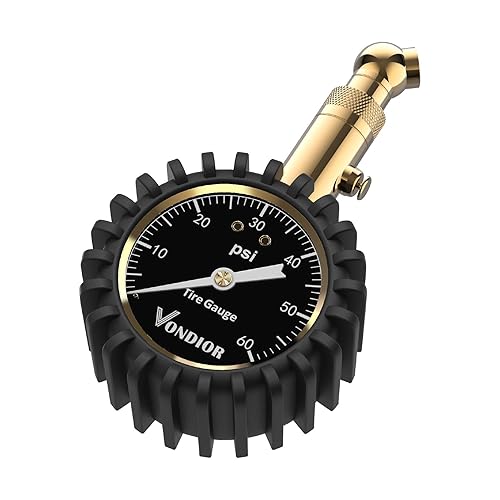
Dual-cylinder 150 PSI pump to top up big ag tyres in the field.
Check price on Amazon →Reaches inner duals and awkward valve stems.
Check price on Amazon →Use wheel slip to check your setup
Slip is the best practical test of ballast. Many modern tractors show it on the display using radar. Without radar, the eXtension guidance describes a simple method: mark a rear tyre and count wheel revolutions over a set distance with no load, then count again over the same distance with the implement working at full load. The difference as a percentage of the loaded count is the slip.
The same guidance suggests removing ballast if slip is below 10% and adding ballast if it is above 20%. Other published guidance gives tighter targets, typically lower for four-wheel-drive tractors than for two-wheel-drive, so use your manufacturer's recommendation where it gives one. The point is that some slip is normal and efficient; zero slip usually means you are carrying too much weight.
Tyre choice: width, construction and tracks
Sometimes the best setup is a different tyre. Wider tyres, or IF and VF tyres with more flexible sidewalls, can carry the same load at lower pressure. Michelin states that its VF tyres can carry up to 40% more load at the same pressure than a standard radial of the same size. Rubber tracks spread weight further but have their own costs and wear. Our guide to soil compaction, tyres and tracks explains why axle load still matters for deep compaction, however soft the tyre.
Wider is not always better. Bigger tyres cost more, may not fit row crops or tramlines, and add width on narrow roads. Choose tyres for your soils, crops, tramline widths and road use, rather than copying a neighbour with different ground.
Setting up for the job in front of you
Think in jobs rather than seasons. Heavy draft work like ploughing and deep cultivation needs more ballast and field pressures. Light work like spraying or rolling needs less weight and care not to over-compact the surface. Loader work needs rear ballast or a counterweight to keep the rear axle planted and steering safe when lifting.
Keep a simple record for each tractor and implement: axle weights, ballast fitted, field and road pressures and the slip you saw. Over a season or two that record becomes a set-up sheet any operator can follow. Precision jobs depend on the same groundwork; see our guides to precision spraying and weed control and regenerative farming machinery.
Operator checklist
Run through this list at the start of a new job, and whenever the implement or conditions change.
- Axle loads known for the implement being used.
- Tyre maker's table checked for that load and speed.
- Pressures checked cold with a reliable gauge.
- Front-to-rear balance appropriate, especially with loaders or heavy mounted kit.
- Wheel slip checked under full load and ballast adjusted if needed.
- Tyres in good condition, correct size and matched front to rear on four-wheel drive.
- Pressure raised before road work if the tractor will run loaded at speed.
Sources
Sources checked 2026-09-25
- Michelin: How to find the correct tyre pressure for your tractor — checked 2026-09-25
- eXtension Farm Energy: Ballasting tractors for optimal fuel efficiency — checked 2026-09-25
- AHDB: Soil compaction from machinery — checked 2026-09-25
- Michelin: UltraFlex (IF/VF) tyre technology — checked 2026-09-25
Corrections and feedback
See our Corrections Policy, contact the team, or Report incorrect information.
Compare machines before you buy.
Use FarmFleetSpecs to check specs, photos, source confidence and recorded recall notices for tractors, combines and other farm equipment.