Harvest logistics: the machinery behind a smooth combining day
A combine can only work as fast as the grain leaves it. Carts, trailers, road rules, intake pits and the dryer set the real pace of harvest. Here is how to find and fix the bottleneck.
The editorial team that prepares and reviews FarmFleetSpecs reports and guides.
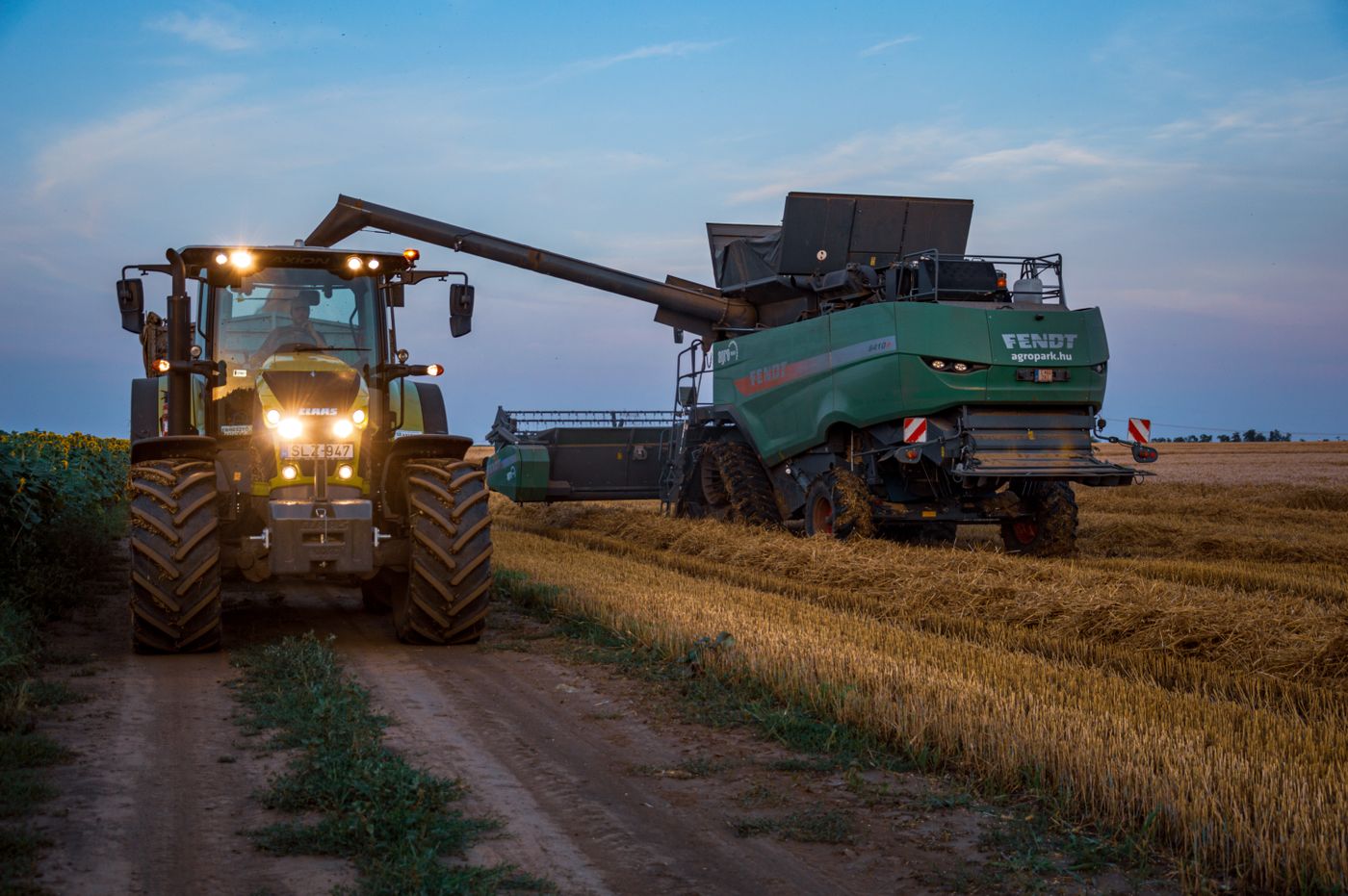
Think of harvest as a chain
A combine stopped with a full tank is the most visible waste at harvest, but the cause is usually further down the line: not enough trailers, a slow road journey, a queue at the intake pit, a dryer running flat out, or a store that is full. Adding a bigger combine to a system with a haulage or drying bottleneck simply moves the queue.
The first step is to measure. For a few days, note when the combine waits to unload, when trailers wait at the pit and how many tonnes per hour the dryer actually handles. Many modern combines and telematics systems log unloading events and idle time, which makes this easier; a notebook works too.
Working out how much haulage you need
A cycle-time calculation gives a first answer. Estimate the combine's realistic output in tonnes per hour in your crops, not its peak rating. Then time how long each trailer is away from the combine: travel to the yard, weighing if you weigh, tipping, and the return trip. Divide that by the time it takes the combine to fill one trailer, round up, and add one for the trailer being filled.
For example, suppose a combine averages 30 t/h and trailers carry 14 t. Each trailer fills in about 28 minutes. If the round trip from the field to the store, tipping and returning takes 55 minutes, you need two trailers on the road plus one being filled, so three in total, to keep the combine moving. Move to a field 8 km further away and the cycle can easily reach 80 minutes, pushing the need to four. The figures are illustrative; plug in your own.
In the US, where fields are larger and trucks do the road haul, a grain cart shuttles between the combine and trucks parked at the field edge. Size the cart so it can take at least one full combine tank, and preferably more, and check that it can unload into a truck in the time the combine takes to fill again. A cart that is too large for the tractor or the soil conditions creates a different problem: compaction on headlands and field entrances.
- Combine realistic output (t/h) in your crop and conditions.
- Trailer or cart capacity (t), allowing for grain density: oilseed rape and oats are lighter per cubic metre than wheat.
- Time away from the combine: travel, weigh, tip and return.
- Number of units = time away divided by fill time, rounded up, plus one being filled.
- Re-check for distant fields, road congestion and slow intake.
Road rules in Great Britain
Trailer size and road speed are set by law, and they cap what extra haulage capacity can deliver. The Department for Transport's guide to tractors and regulatory requirements sets most tractors at 40 km/h (25 mph). Higher-specification tractors with all-wheel suspension, 50% braking efficiency, pneumatic tyres, a speedometer and a horn may travel at up to 40 mph (65 km/h), subject to the relevant rules. The maximum weight for an agricultural trailer is 18.29 tonnes, and the maximum for a tractor and trailer combination is 31 tonnes.
These limits date from March 2015, when the combination weight rose from 24.39 t and the speed limit from 20 mph. The government considered further trailer weight increases but decided in February 2017 not to proceed, citing extra road wear. Width also matters: the guide sets lower speed limits for vehicles over 2.55 m wide, and requires police notification for journeys by vehicles over 3.0 m wide.
Driver licensing needs care in a team that includes young or seasonal staff. The guide says a 16-year-old with a category F licence can drive tractors up to 2.45 m wide towing a two-wheeled or four-wheeled close-coupled trailer of similar width, while 17-year-olds can drive all sizes on category F for agricultural use. Our guide to training and the farm skills gap covers induction for new drivers.
The yard: intake, weighing and tipping
The yard is often the hidden bottleneck. A single intake pit with a slow elevator can make a queue of trailers even when field haulage is well matched. Check the intake conveyor capacity in tonnes per hour against the combine's output, and see whether trailers can turn and tip without reversing past each other.
Weighbridges give valuable data but add time; if one is used, place it where trailers do not have to double back. Keep tipping areas lit and clear, and separate harvest traffic from pedestrians and other yard work. A dedicated one-way route through the yard cuts both delays and near-misses.
Drying and storage set the pace in a wet year
AHDB's grain storage guidance advises drying cereals with a moisture content at or above 18% immediately, keeping cereals below 14.5% moisture for safe storage and below 13% to prevent mites breeding, and drying oilseed rape to 7.5-8% (but not below 6%). Grain that waits in a wet heap loses quality quickly, so in a damp harvest the dryer's hourly throughput at your typical intake moisture decides how fast the combine can really go.
Check the dryer's rated output at the moisture levels you usually harvest, not its best-case figure: removing five points of moisture takes far longer than removing two. Wet holding bins or a ventilated wet store buy time, but only if they are aerated. Our guide to grain storage and energy efficiency covers drying costs and cooling targets in more detail.
Pre-harvest checklist
Work through this list before the first field is ready. Most items take minutes; skipping them can cost days.
- Service trailers: brakes, lights, tyres, tailgates and hydraulic hoses; check plating and weights.
- Confirm each driver's licence category covers the tractor and trailer they will use.
- Test intake pit, elevators, dryer burners and fans, and the moisture meter against a calibrated reference.
- Clean and treat empty stores and check ventilation floors or spears.
- Plan field order to keep haul distances short, and agree yard routes and tipping order.
- Set up a simple communication method between combine, haulage and yard (radio or phone group).
- Agree the rules for when to stop for moisture or weather, so the team is not guessing.
Where to invest first
If your combine regularly waits, fix haulage or intake before buying a bigger combine. If trailers wait at the yard, look at intake and drying capacity. If everything is balanced but still slow, then combine capacity is the constraint. Use FarmFleets search and the combine harvester category to compare grain tank sizes, unloading rates and header widths, and read our guide to combine settings and grain loss before assuming a new machine is the answer.
Sources
Sources checked 2026-09-25
- GOV.UK (DfT): Tractors and regulatory requirements, a brief guide — checked 2026-09-25
- GOV.UK: Increasing the agricultural trailers and combinations weight limit (consultation outcome) — checked 2026-09-25
- AHDB: Grain storage moisture targets for cereals and oilseed rape — checked 2026-09-25
Corrections and feedback
See our Corrections Policy, contact the team, or Report incorrect information.
Compare machines before you buy.
Use FarmFleetSpecs to check specs, photos, source confidence and recorded recall notices for tractors, combines and other farm equipment.